Fitness Resumes

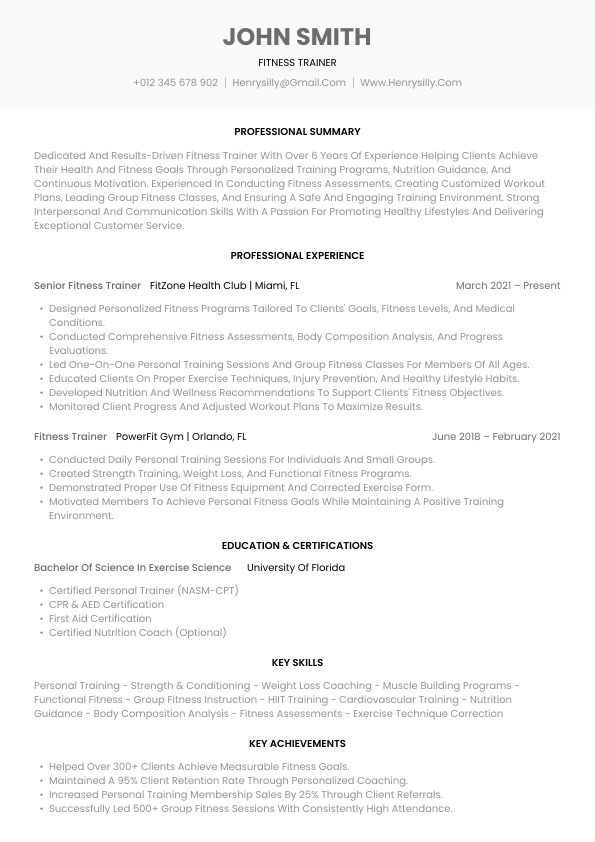
You can coach someone through their hardest set. Writing about it on paper is the rep nobody trained you for. Most fitness resumes read like a certification list — CPT, CPR, three years at a gym. What they leave out is the part that gets you hired: retention rates, class sizes, client results, athletes advanced. Numbers you already have but never thought to write down. Every example below fixes that, whether you're coaching a pool deck, a mat, or a full gym floor.

Manufacturing Resumes

You keep a line running, a machine calibrated, a shift on target. Then your resume reduces all of it to "operated production equipment." That's the gap costing people interviews. Plant supervisors scan for three things: the equipment you've actually run, your safety record, and whether you'll show up. Most resumes make them guess at all three. Every example below answers those questions on the first page with real output, scrap, uptime, and safety numbers you can adapt to your own floor.

Sales Resumes

You can sell anything. The one product you struggle to pitch is yourself. It's the great irony of sales hiring: reps who can build a case for a $200K deal write resumes that say "responsible for managing accounts." No quota attainment. No pipeline value. No close rate. The exact numbers a sales director needs to see, missing from the one document that decides everything. Every example below fixes that from entry-level and door-to-door through medical, technical, and enterprise sales leadership.

Healthcare & Pharmacy Resumes

You take care of patients all day. Your resume has to prove you can do it safely, and most don't. Healthcare hiring runs on specifics: your licence and its status, your patient load per shift, the EMR you chart in, and the certifications that expire. Miss any one of those and you're screened out before anyone ever reads about your bedside manner. Every example below leads with what actually gets checked first — whatever your setting or credential.

Consulting Resumes

Clients hire you to solve problems. So why does your own resume read like a list of engagements? Consulting resumes fail in a specific way: they describe what the project was about instead of what changed because you were on it. No cost saved, no revenue unlocked, no process fixed, no client retained. The one document meant to prove your value ends up being the least persuasive thing you've written. Every example below is built around outcomes — whatever kind of advisory work you do.

Real Estate Resumes

In real estate, everything comes down to numbers — until you write your resume, and suddenly they all disappear. Deals closed. Volume transacted. Occupancy held. Claims settled. Portfolio size. These are the figures that decide who gets called back, and they're exactly what most real estate resumes replace with phrases like "managed a portfolio of properties." Every example below puts the numbers back where they belong.

Information Technology Resumes

IT hiring is growing fast. Getting past the filter isn't. The problem is structural: your resume gets parsed by software before a human sees it, and most IT resumes are written for neither. Too many acronyms for the hiring manager, too few exact tool names for the parser, and almost no proof of impact for either. Every example below is built for both readers — with role-specific keywords, real infrastructure numbers, and the certifications that get checked first.

Art, Creative & Design

Build a highly competitive resume tailored for Art, Creative & Design. Our professional designs are optimized for applicant tracking systems (ATS) and designed to catch the eye of recruiters in this industry. Use our tools and layouts below to get started.

Human Resources

Build a highly competitive resume tailored for Human Resources. Our professional designs are optimized for applicant tracking systems (ATS) and designed to catch the eye of recruiters in this industry. Use our tools and layouts below to get started.

Transportation Resumes

You move people and freight safely for a living. Getting that across on one page is the harder route. Transportation hiring runs on things most resumes forget to state: licence class and endorsements, clean driving abstract, hours and miles logged, on-time delivery rate, incident-free years, flight hours and type ratings. Leave those out and a fleet manager or chief pilot has nothing to screen on. Every example below leads with what gets checked first.

Media & Journalism Resumes

You tell other people's stories for a living. Yours is the one that never quite lands. Media resumes fail on a specific point: they describe the beat instead of the reach. No circulation, no audience numbers, no publication count, no engagement growth, no bylines linked. Editors hire on evidence of output and impact, and most applications give them neither. Every example below fixes that with your clips where an editor can actually find them.

Engineering Resumes

You solve hard problems with constraints, evidence, and numbers. Then your resume abandons all three. It's the most common failure in engineering hiring: resumes that list disciplines, software, and job titles but never quantify a single outcome. No tolerance held, no cost reduced, no downtime eliminated, no project delivered on budget. Hiring managers who think in metrics get handed a document with none. Every example below is built discipline by discipline, with the numbers that prove the work.

Hospitality Resumes

Turnover in hospitality is brutal, and every hiring manager knows it. That's the real thing they're screening for — not your skills, but whether you'll still be here in six months. Most hospitality resumes never address it. No tenure highlighted, no covers per shift, no sales per shift, no availability stated, no reason given to believe you'll stay. So a manager reads it as one more application from someone who'll leave by spring. Every example below is built to answer that doubt first — whether you're behind the bar, on the floor, in the kitchen, or running the property.

Business Management Resumes

Anyone can write "led a team." Almost nobody writes what the team achieved. That's the gap that costs managers interviews. Headcount supported, budget owned, revenue influenced, cost reduced, retention improved — these are the figures that separate a real operator from someone who simply held the title. Most management resumes describe responsibilities and leave the outcomes out entirely. Every example below is built around scope and results, from first-time supervisor to executive.

Therapy Resumes

You know exactly which questions to ask a client. The one you struggle with is what to say about yourself. Therapy resumes fail on the same points every time: licence status left vague, caseload never stated, setting not named, and outcomes described in feelings rather than figures. The person hiring you needs to know you're credentialed, you can carry the caseload, and you document properly — and most applications answer none of it. Every example below leads with what gets checked first.

Financial Services Resumes

You work with numbers all day. Somehow they never make it onto your resume. Finance hiring is the most quantitative screening there is — AUM managed, deal value, portfolio return, book size, models built, licences held. Yet most finance resumes describe responsibilities in the vaguest possible terms and leave every figure out. In an industry that hires on measurable performance, that's fatal. Every example below puts the numbers back, from entry-level analyst to portfolio manager.

Government Resumes

Public sector hiring plays by entirely different rules — and that's why strong candidates get rejected before anyone reads their qualifications. Federal and civil service applications demand things private-sector resumes never include: hours worked per week, exact employment dates, supervisor contact details, salary and grade history, and explicit evidence against every stated qualification. Miss any one and the application is screened out as incomplete, no matter how well you'd do the job. Every example below is built for how government hiring actually works.

Maintenance & Repair Resumes

You diagnose faults for a living. The one you keep missing is on your own resume. Trades hiring runs on specifics most applications skip entirely: licences and their class, systems and equipment you've worked on, response and repair times, callback rate, safety record, and whether you can be trusted alone on a customer's property. Without those, a service manager can't tell a first-year apprentice from a fifteen-year tech. Every example below puts your credentials and your track record where they get read first.

Insurance Resumes

Insurance runs on assessing risk accurately. Yet most insurance resumes give a hiring manager nothing to assess. Claims volume, settlement accuracy, cycle time, loss ratio, book of business, premium written, licences and lines held — these are the figures that separate candidates in this industry, and they're exactly what generic resumes replace with "handled claims and serviced clients." Every example below leads with your licences and your numbers, whether you're underwriting, adjusting, selling, or running a claims team.

Research Resumes

You spend months getting the methodology right. Then you write the resume in an afternoon and wonder why nothing comes back. Research resumes fail on a predictable point: they list what you studied instead of what you found and what it changed. No sample sizes, no publications linked, no methods named, no decisions influenced. The most rigorous people in the room end up submitting the least evidenced document in the pile. Every example below is built around findings and impact — academic, applied, or user research.

Advertising & Marketing & PR Resumes

You build campaigns that move people to act. Your resume is the one piece of copy that doesn't. It's the most common problem in marketing hiring: professionals who obsess over conversion rates all week describe their own work as "managed marketing campaigns and social media." No reach, no CPA, no ROAS, no pipeline generated, no coverage secured. The one audience that matters gets the weakest brief you've ever written. Every example below is built around performance — from intern to VP, across paid, organic, brand, and PR.

Banking Resumes

Banking hires on trust and precision. Most banking resumes demonstrate neither. A hiring manager needs to see specifics you probably didn't think to include: portfolio value, loan volume originated, transaction accuracy, compliance record, licences held, and clients managed. Instead they get "assisted customers with banking needs" — a line that could describe a first-week teller or a fifteen-year relationship manager. Every example below puts your numbers and your compliance record where they belong.

Child Care Resumes

Parents and centre directors are hiring someone to keep children safe. That's the bar and most child care resumes never clear it. What they're scanning for is specific: background check status, CPR and first aid certification with dates, ages you've cared for, number of children at once, and how long you stayed in each role. Warmth is assumed. Evidence that you're safe, qualified, and reliable is what actually gets you the interview. Every example below leads with exactly that.

Accounting & Auditing Resumes

You reconcile everything to the cent. Then your resume goes out with no figures in it at all. Accounting hiring is quantitative by nature: ledger size, close cycle time, transaction volume, error rate, audit findings, systems used, credentials held. Yet most accounting resumes describe duties in the abstract and leave every measurable detail out — in the one profession where measurement is the entire point. Every example below puts them back, from staff accountant through controller.

Business Strategy & Analysis Resumes

You turn messy data into decisions people act on. Your resume should be the clearest example of that — and usually it's the muddiest. Analyst resumes fail on one thing: they describe the analysis instead of the decision it drove. No cost saved, no revenue unlocked, no process changed, no forecast accuracy, no stakeholder outcome. Just "performed analysis and delivered reports," which tells a hiring manager nothing about whether anyone listened. Every example below is built around the decision, not the deliverable.

Education Resumes

You assess student progress with evidence all year. Then your resume describes your teaching with none. School administrators are screening for specifics: certification and the states or subjects it covers, grade levels and class sizes taught, student growth data, curriculum you've built, and the interventions that worked. What most education resumes offer instead is "taught students and developed lesson plans" — a line that fits a first-year sub and a twenty-year department head equally. Every example below leads with your credentials and your outcomes.

Animal Care Resumes

Loving animals is the baseline. Every single applicant has that — which is exactly why it can't be what your resume leads with. What sets candidates apart is concrete: certifications and licences, species and breeds handled, animals cared for per shift, medical procedures assisted, safe restraint and handling experience, and incident record. Most animal care resumes open with "passionate about animals" and never get past it. Every example below leads with the evidence instead — a clinic, kennel, shelter, farm, or field.

Logistics & Supply Chain Resumes

Your entire job is measured on on-time rates, fill rates, cost per unit, inventory accuracy. Then your resume goes out with none of it. It's the strangest gap in logistics hiring. People who live inside dashboards all week describe their own work as "managed warehouse operations and coordinated shipments," giving a hiring manager no sense of volume, scale, or whether anything improved on their watch. Every example below is built around the numbers you already report — from the warehouse floor to network planning.

Medical Resumes

Clinical hiring has a filter most candidates never see. Miss it and your qualifications never get read. Licence status and state. Board certification. Patient volume per shift. The EMR you chart in. Certifications with expiry dates. That's the first thirty seconds — and most medical resumes bury all five under a summary about compassionate patient care. Every example below leads with what actually gets checked first, whatever your specialty or setting.

Retail Resumes

Retail runs on numbers all day — targets, conversion, transaction value, shrink. Then your resume goes out without a single one. That's the gap. Store managers hire on proof of revenue impact, not on friendliness, and "provided excellent customer service" appears on every application in the pile. Without your sales figures, loyalty sign-ups, or conversion rate, there's nothing to separate you from the other forty. Every example below puts the numbers back — floor to store management.

Fashion & Beauty Resumes

These industries judge presentations instantly — which is exactly why a beautiful resume can still cost you the job. Decorative layouts that applicant tracking systems read as blank pages. Portfolios and Instagram handles buried at the bottom. Client work described without retention rates, rebooking numbers, or revenue. In fields built on visual proof, most applications hide it. Every example below keeps your work visible and your resume readable — behind the chair, on the floor, or in the studio.

Law Enforcement & Military & Security Resumes

Your resume doesn't just get you the interview here. It gets verified. That's what makes this field different. Background investigations, polygraphs, and clearance checks mean every date, title, and claim on the page gets confirmed by someone. Round a date and it reads as a discrepancy. Inflate a title and it costs you the job permanently. Yet most candidates write these resumes the way they'd write any other. Every example below is built for a process where accuracy comes first and polish comes second.

Administrative & Clerical Resumes

When you do this job well, nothing goes wrong — which is exactly why it's so hard to write about. Admin resumes fail because the work is invisible by design. No calendars managed, no executives supported, no invoices processed, no tickets resolved, no systems named. Just "provided administrative support," which describes everyone in the pile and distinguishes nobody. Every example below turns invisible work into evidence — volume, systems, scope, and what ran better because of you.

Charity & Non-Profit Resumes

You do this work because it matters. Unfortunately, mission alone doesn't get you hired. Non-profit hiring is more competitive than most people expect, and boards want the same thing corporate boards want: evidence. Funds raised, grants secured, volunteers managed, people served, programme outcomes delivered. Passion is the entry ticket — measurable impact is what gets you the role. Every example below is built around both.

Science & Biotech Resumes

You document every protocol precisely. Then your resume goes out saying "performed laboratory experiments." Science hiring is unusually specific: techniques and assays by name, instrumentation operated, sample throughput, GLP or GMP environment, publications, and regulatory exposure. A hiring manager needs to know whether you can walk into their lab and run their workflow — and vague duty descriptions make that impossible to judge. Every example below names the work precisely, the way your field expects.

Building & Construction Resumes

You deliver projects on scope, on budget, on time. Your resume mentions none of those three. Construction hiring is judged on scale and delivery: project values, square footage, crew size, licences and tickets held, safety record, and whether jobs finished on schedule. Most resumes replace all of it with "worked on commercial construction projects," giving a hiring manager no way to place you. Every example below leads with the scale you've built — from the tools to the drawing board.