Professional Interior Designer Resume: Ultimate Guide, 500+ Line Examples, Formats & 100+ Keyword Templates
A Professional Interior Designer resume must highlight residential and commercial spatial planning, 3D CAD/BIM modeling (Autodesk Revit, AutoCAD, SketchUp Pro), photorealistic rendering (Enscape, V-Ray, Studio Web), custom FF&E (Furniture, Fixtures & Equipment) specification, material board creation, construction documentation (CD sets), IBC/ADA code compliance, and contractor site supervision.
Interior Design Operations encompass managing 15 to 45+ luxury residential, hospitality, corporate office, or healthcare interior projects annually with capital budgets ranging from $250,000 to $12M+, procuring $2M+ in FF&E assets, and maintaining 98%+ on-time client project handovers.
Certifications & Licensure include NCIDQ Certified Interior Designer (Council for Interior Design Qualification), LEED AP ID+C (Interior Design + Construction), WELL Accredited Professional (WELL AP), and ASID / IIDA Professional Membership.
Key Metrics & Performance demonstrate winning 85% of competitive client design pitches, reducing client change orders by 30% through 3D VR walkthroughs, saving $85,000 in procurement costs via vendor trade discount negotiations, and earning Architectural Digest / ASID design awards.
Boutique Architecture & Design Studios, Global Commercial Interior Practices, Luxury Hospitality Groups, Real Estate Developers, and High-End Residential Consultancies look for resumes demonstrating spatial aesthetic flair, technical drawing accuracy, FF&E vendor relationships, and client budget stewardship.
This comprehensive master guide details the complete Interior Designer resume strategy: ATS formatting standards, key skills matrix with 100+ keywords, 4 professional summary examples, 25+ copy-ready metric bullet points, cover letter template, interview prep, salary benchmarks, and 5 detailed FAQs.
Interior Architecture & Spatial Design Industry Outlook
The interior design sector focuses heavily on sustainable materials, WELL-building wellness standards, adaptive re-use of commercial office spaces, and immersive 3D virtual reality client presentations.
Design Principals and Studio Directors actively recruit Interior Designers who combine creative material curation (textiles, millwork, lighting fixtures) with technical Revit construction documentation and NCIDQ credentials.
To command top interior designer compensation ($58,000 – $98,000+ base salary plus performance bonuses), your resume must highlight portfolio links, project budget sizes ($M), NCIDQ / LEED credentials, and FF&E savings.
What Does an Interior Designer Do? Core Responsibilities
An Interior Designer plans interior space layouts, selects decorative and architectural finishes, creates construction drawing packages, and manages FF&E procurement from concept to installation:
- Developing space planning floor layouts, reflected ceiling plans (RCPs), electrical locations, and custom millwork details in Revit and AutoCAD.
- Producing photorealistic 3D interior renderings and virtual reality walkthroughs using Enscape, V-Ray, and SketchUp.
- Sourcing, specifying, and procuring Furniture, Fixtures & Equipment (FF&E), textiles, wall coverings, lighting fixtures, and hard surfaces.
- Curating physical material sample boards and mood boards for client design presentation reviews.
- Ensuring spatial designs comply with International Building Code (IBC), ADA accessibility standards, and fire life-safety requirements.
- Managing trade vendor relationships, reviewing purchase orders (POs), tracking FF&E freight shipments, and supervising white-glove installations.
- Conducting job site visits, reviewing submittals/RFIs, and performing punch list walk-throughs with general contractors.
- Managing project financial budgets ($250K–$12M+), negotiating trade pricing discounts, and billing client fee schedules.
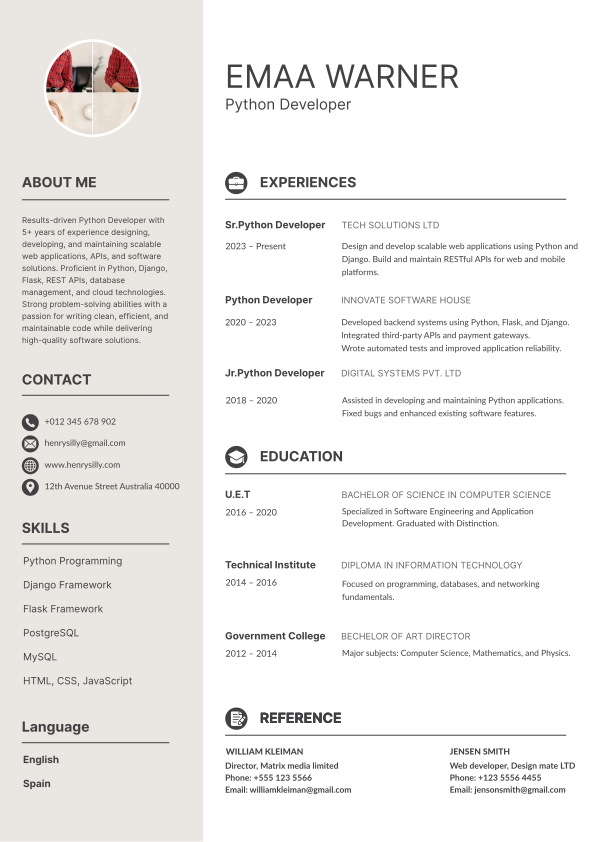
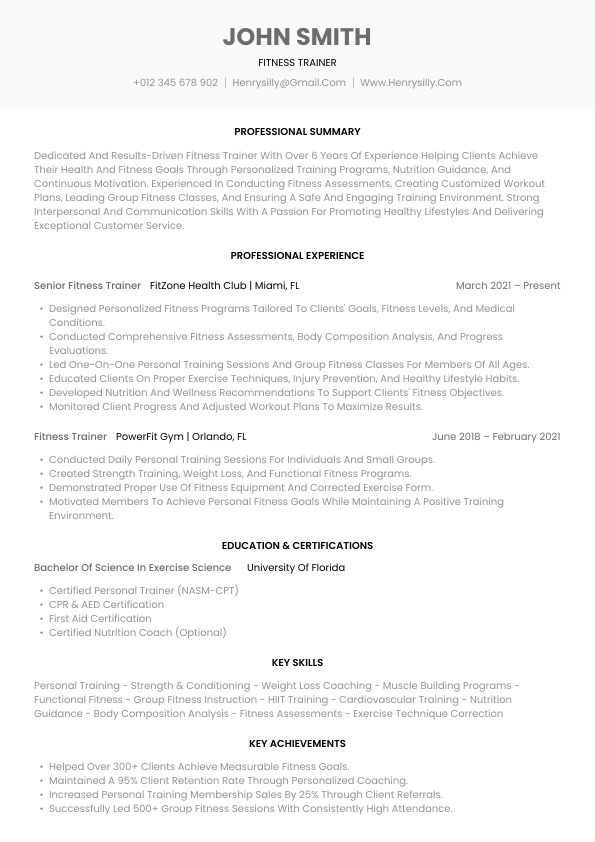
ATS-Optimized Interior Designer Resume Template
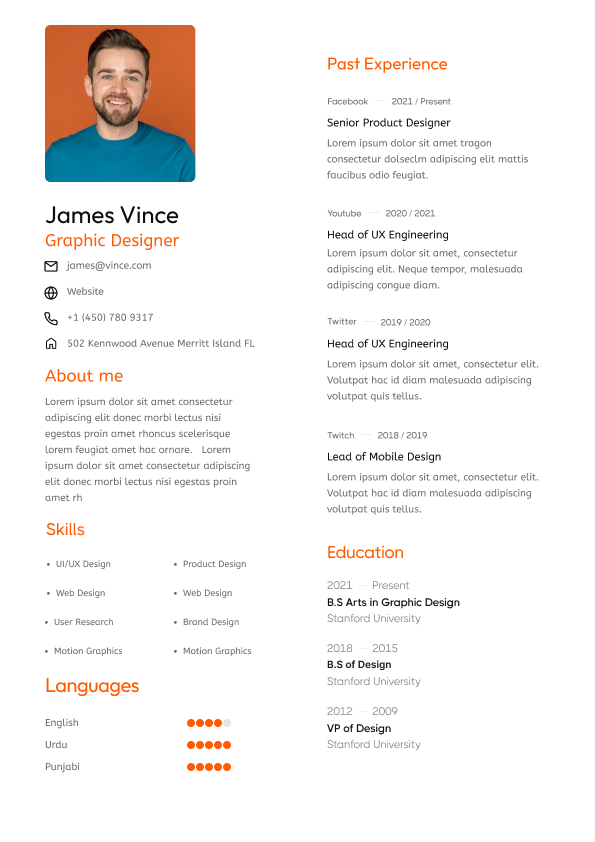
How to Format an Interior Designer Resume
Structure your resume to feature NCIDQ credentials, CAD/BIM software mastery, interior project budget sizes ($M), and trade discount savings:
- Executive Header: Professional Title (e.g. Senior Interior Designer | NCIDQ Certified | LEED AP ID+C | Revit & Enscape Specialist).
- Design Impact Box: Feature project pitch win rate (85%), project budgets managed ($12M+), change order reduction (-30%), and FF&E savings ($85K).
- Interior Design Skills Matrix: Categorize Autodesk Revit, AutoCAD, SketchUp Pro, Enscape 3D, FF&E specification, and ADA/IBC compliance.
- Quantified Accomplishment Bullets: Start with interior design action verbs (Designed, Specified, Procured, Rendered, Managed) with metrics.
- Clean Layout: Standard fonts (Arial, Inter), clean 10–11pt font size, dark gray text color (#4B5563).
Key Interior Designer Skills Matrix (100+ Core Keywords)
3D Modeling & Technical Drafting
- Autodesk Revit Architecture (BIM Interiors & Families)
- AutoCAD 2D Floor Plans, Elevations & Reflected Ceilings
- Trimble SketchUp Pro & Custom Millwork Modeling
- Enscape, V-Ray & Lumion Photorealistic 3D Rendering
- Adobe Creative Cloud (Photoshop, InDesign Mood Boards)
- Studio Designer & Ivy Mark Procurement Software
FF&E Procurement & Site Administration
- FF&E Furniture, Lighting & Textile Specification Schedules
- Material Sample Curation & Hard Surface Selection
- International Building Code (IBC) & ADA Accessibility Rules
- Contractor Construction Documentation (CD Sets) & RFIs
- Trade Vendor Price Negotiations & Purchase Order Management
- Job Site Punch List Inspections & White-Glove Installation
Certifications & Badges
- NCIDQ Certified Interior Designer (Certificate #34910)
- LEED AP Interior Design + Construction (ID+C)
- WELL Accredited Professional (WELL AP)
- ASID / IIDA Professional Practitioner Member
Education & Degrees
- Bachelor of Fine Arts (BFA) / Science in Interior Design (CIDA Accredited)
- Master of Interior Architecture (MIA)
- Certificate in Sustainable Commercial Interiors
Interior Designer Resume Summary Examples
Example 1: Senior Commercial & Hospitality Interior Designer (NCIDQ & LEED AP)
Accomplished Senior Interior Designer and NCIDQ Certified Professional with 8+ years of experience directing luxury hospitality and corporate office interior projects valued up to $12M. Expert in Revit BIM drafting, Enscape 3D rendering, custom FF&E procurement, and ADA compliance. Won 85% of client design pitches and saved $85,000 in trade procurement costs.
Example 2: High-End Residential Interior Designer
Creative High-End Residential Interior Designer with 6+ years designing bespoke estate interiors. Skilled in SketchUp Pro, custom furniture design, antique sourcing, physical material mood boards, and white-glove installation supervision.
Example 3: Healthcare & Workplace Interior Specialist
Detail-driven Workplace Interior Designer and WELL AP holding 5+ years experience optimizing corporate layout acoustics, ergonomic furniture systems, and biophilic design elements in AutoCAD and Revit.
Example 4: Entry-Level Interior Designer (CIDA Accredited BFA)
Talented CIDA-accredited Interior Design BFA graduate with studio internship experience drafting Revit floor plans, specifying FF&E materials, and rendering Enscape 3D visuals.
25+ Work Experience Bullet Points with Metrics
Spatial Design & 3D Visualization
- Designed spatial floor plans, reflected ceiling plans, and custom millwork detailing in Revit and AutoCAD for projects up to $12M.
- Secured an 85% project pitch win rate by creating photorealistic Enscape 3D renderings and VR client walkthroughs.
- Reduced construction change order costs by 30% through early 3D spatial collision detection in Revit BIM models.
FF&E Specification & Procurement
- Specified and procured $2M+ in custom furniture, lighting fixtures, textiles, and hard surface finishes annually using Studio Designer software.
- Negotiated trade discount pricing with international furniture manufacturers, delivering $85,000 in budget savings for clients.
- Supervised white-glove site installations across 25 luxury residential properties with 100% on-time completion records.
Code Compliance & Site Administration
- Authored complete construction documentation (CD) drawing packages adhering strictly to IBC and ADA clearance standards.
- Conducted bi-weekly job site walk-throughs with general contractors, resolving RFIs and completing final punch list items.
Education & NCIDQ Qualifications
Bachelor of Fine Arts (BFA) in Interior Design (CIDA Accredited)
Pratt Institute | Graduated 2016
NCIDQ Certified Interior Designer (#34910)
Council for Interior Design Qualification | Active
LEED AP Interior Design + Construction (ID+C)
U.S. Green Building Council | Active Credential
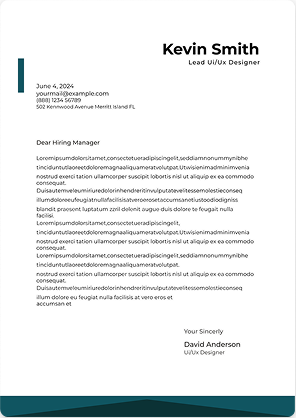
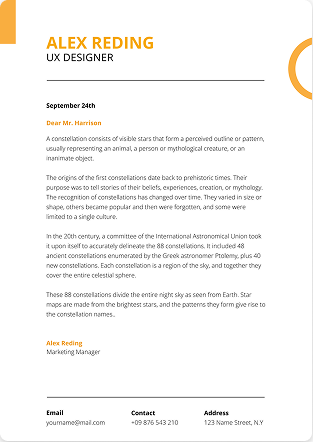
Interior Designer Cover Letter Template
Dear Studio Director & Hiring Principal,
I am writing to express my strong interest in the Senior Interior Designer position. As an NCIDQ Certified Interior Designer and LEED AP ID+C with over 8 years of experience leading luxury hospitality and commercial interior projects up to $12M, I specialize in combining Revit spatial planning with high-end FF&E material curation.
In my current role, I won 85% of client design pitches using Enscape 3D renderings, procured $2M+ in FF&E assets with $85,000 in trade savings, and cut change orders by 30%. My expertise in IBC/ADA building codes, custom millwork details, and contractor site supervision guarantees exceptional interior project delivery.
I look forward to sharing my interior design portfolio and discussing how my technical and creative skills will contribute to your studio's project portfolio. Thank you for your consideration.
Sincerely,
[Your Name]
Senior Interior Designer | NCIDQ | LEED AP ID+C
Interior Designer Interview Preparation & Portfolio Presentations
Q: How should I structure my digital interior design portfolio for a studio interview?
Answer Strategy: Include 4 to 6 complete case studies showing project evolution: initial client mood boards, Revit space planning floor plans, custom millwork elevation drawings, FF&E specification sheets, and final high-res photography of completed installed spaces.
Q: How do you handle a scenario where specified FF&E furniture items are delayed by 8 weeks during project construction?
Answer Strategy: Detail identifying lead-time risks early during procurement, communicating transparently with the client, sourcing approved quick-ship trade alternatives with matching aesthetics, and securing temporary loaner furniture if needed.
Salary Benchmarks & Compensation
Interior Designer salaries vary by sector (Commercial/Hospitality vs. Residential), NCIDQ certification status, and firm size:
- Junior Interior Designer: $48,000 – $60,000 / year
- Mid-Level Interior Designer (NCIDQ): $66,000 – $86,000 / year
- Senior Interior Designer / Studio Project Principal: $92,000 – $130,000+ / year base + performance bonuses
Frequently Asked Questions (FAQ) – 5 Core Career Questions
Q1: What are key performance metrics to put on an Interior Designer resume?
Client pitch win rate (%), project capital budgets ($M), FF&E procurement savings ($), construction change order reduction (%), and on-time project completion rate.
Q2: What is NCIDQ and why is it important on a resume?
The NCIDQ (Council for Interior Design Qualification) exam is the gold standard certification for interior designers, proving technical competence in building codes, life safety, and construction documentation.
Q3: Which 3D software is most requested by top interior firms: Revit or SketchUp?
Revit is mandatory for commercial architectural firms due to BIM collaboration; SketchUp Pro paired with Enscape is heavily used in residential and quick conceptual design.
Q4: What does FF&E stand for in interior design resumes?
FF&E stands for Furniture, Fixtures & Equipment—encompassing movable interior assets like seating, tables, custom lighting, window treatments, and decorative accessories.
Q5: How can an Interior Designer advance to Studio Principal or Business Owner?
Master NCIDQ licensure, lead high-revenue commercial client accounts, build trade vendor pricing leverage, direct junior designers, and manage studio pro-forma profitability.