Electrical Engineer Resume: Ultimate Guide, 500+ Line Examples, Formats & 100+ Keyword Templates
An Electrical Engineer resume must demonstrate circuit design, power systems engineering, embedded microcontrollers, and electrical safety mastery: PCB schematic capture & layout (Altium Designer, Eagle, KiCAD, OrCAD), Power Distribution Systems (High Voltage HV, Medium Voltage MV, Low Voltage LV, Substation Design, Switchgear, Transformers, ETAP power grid simulation), Embedded Hardware & Microcontrollers (C/C++, ARM Cortex, STM32, PIC, FPGA, Verilog/VHDL), Signal Integrity & Electromagnetic Compatibility (EMC / EMI Compliance testing, FCC, CE), Electrical Safety Standards (NEC / NFPA 70E, IEEE, IEC 61508, UL 508A), Control Systems & Automation (PLC, SCADA, HMI, Modbus, CAN bus), Analog & Digital Signal Processing (DSP, Oscilloscopes, Spectrum Analyzers), and Project Engineering. Engineering Directors, Chief Electrical Engineers, and Utility Managers evaluate an Electrical Engineer CV for circuit performance specs, power efficiency gains (+25%), project budget control, zero arc-flash safety violations, and successful regulatory certification pass rates.
Whether you are writing a Senior Electrical Engineer resume, a Power Systems Electrical Engineer CV, an Embedded Hardware Electrical Engineer resume, a Controls & Automation Electrical Engineer CV, or an Entry-Level Electrical Engineer application, your document requires high ATS keyword density, official certifications (Licensed Professional Engineer PE Electrical, Fundamentals of Engineering FE / EIT, IEEE Member), hardware portfolio links, and quantified engineering metrics.
This ultimate master guide details the complete Electrical Engineer resume framework: ATS formatting standards, key electrical engineering skills matrix featuring 100+ keywords, 4 professional summary examples, 25+ copy-ready metric bullet points, cover letter template, interview prep, salary benchmarks, and 5 detailed FAQs with 30+ search keywords.
Electrification, Power Grids & Embedded Systems Outlook
The global transition toward renewable energy power grids, electric vehicles (EV powertrains, battery management systems BMS), AI data center power infrastructure, and IoT embedded hardware has expanded demand for skilled Electrical Engineers.
To land top-tier Electrical Engineer positions ($85,000 to $125,000+) or Lead Power / Hardware Architect roles ($135,000 to $195,000+), your resume must highlight PE/EIT credentials, Altium PCB design wins, ETAP power grid simulations, and EMI/EMC compliance certifications.
What Does an Electrical Engineer Do? Core Responsibilities & Scope
An Electrical Engineer designs, tests, and oversees the manufacturing of electrical equipment, PCB circuit boards, power generation systems, and control automation. Primary duties include:
- Designing multi-layer printed circuit boards (PCBs) in Altium Designer, creating schematic capture, component placement, and Gerber fabrication files.
- Performing power flow, short-circuit, and arc-flash hazard analysis for commercial and industrial facilities using ETAP or SKM PowerTools.
- Programming microcontrollers (ARM Cortex, STM32) and FPGAs (Xilinx, Altera) in C/C++ and VHDL for real-time embedded hardware control.
- Conducting Electromagnetic Compatibility (EMC/EMI) compliance testing in anechoic chambers to pass FCC and CE mark certification.
- Designing industrial PLC automation control panels, HMI interfaces, and SCADA monitoring networks per UL 508A and NFPA 70 standards.
- Analyzing analog and digital signals using high-speed oscilloscopes, logic analyzers, spectrum analyzers, and MATLAB filter simulations.
- Authoring electrical Single-Line Diagrams (SLDs), wiring schematics, and Bill of Materials (BOM) in AutoCAD Electrical.
- Collaborating with mechanical, firmware, and manufacturing teams during NPI prototyping and factory acceptance testing (FAT).
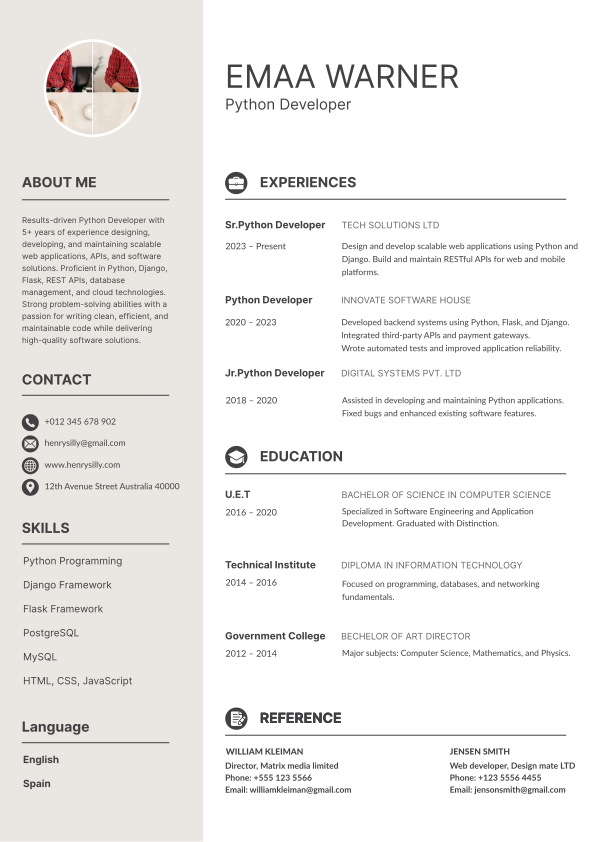
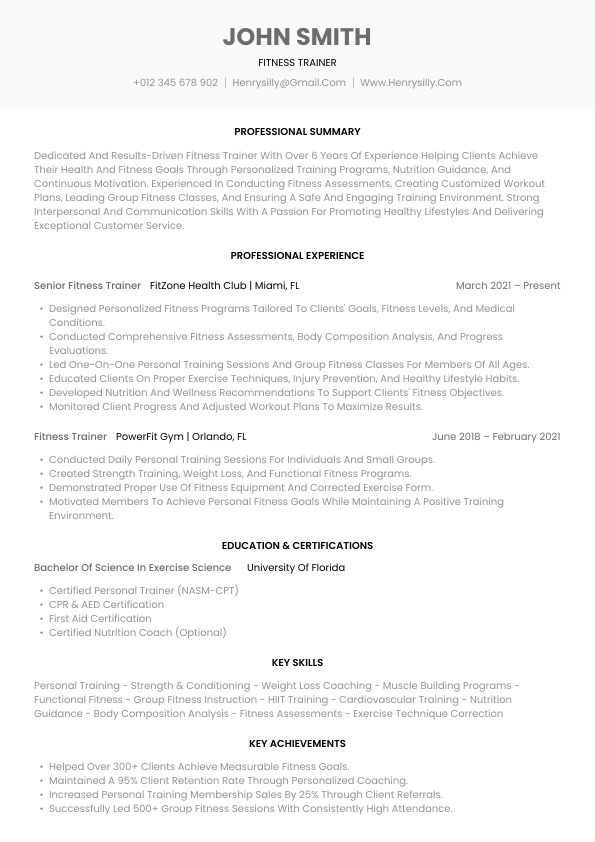
ATS-Optimized Electrical Engineer Resume Template
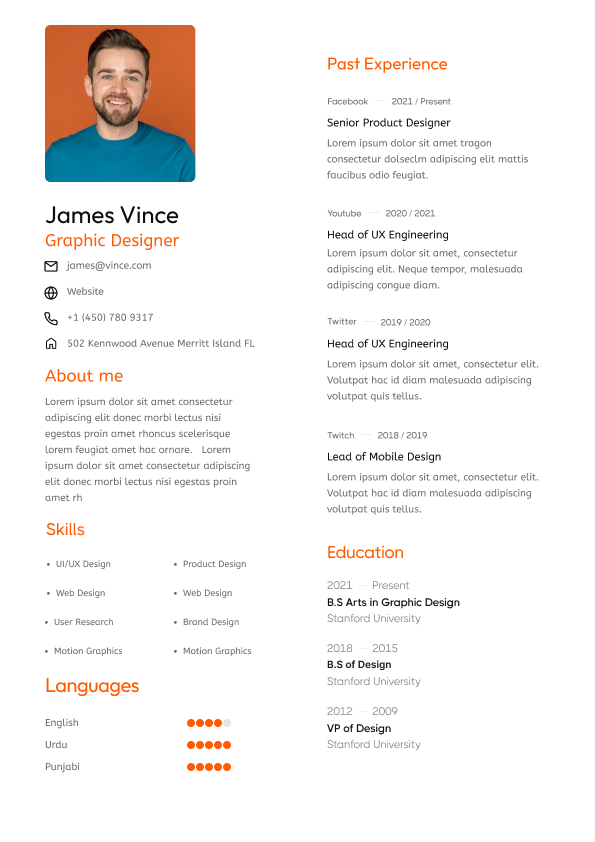
How to Format an Electrical Engineer Resume for Hiring VPs
Engineering VPs and Chief Electrical Engineers scan Electrical Engineer CVs for PE/EIT licensure, CAD/PCB software mastery (Altium/AutoCAD Electrical), power/embedded skills, IEEE certifications, and compliance wins:
- Header Credentials: Display full name, professional title (e.g. Senior Electrical Engineer | PE Licensed | Altium & ETAP Specialist | Embedded Hardware & Power Systems), phone, email, portfolio/GitHub link, and LinkedIn.
- Reverse-Chronological Layout: Highlight electrical design positions, PCB revisions completed, power grid projects ($10M+), EMI compliance approvals, and cost reductions first.
- Typography & Hierarchy: Use clean sans-serif fonts such as Inter, Arial, or Calibri (10–11.5pt body text, 14–16pt section headers).
- Quantified Electrical Metrics: Always quantify outcomes (e.g. "Designed 12 multi-layer PCBs in Altium Designer with zero signal integrity spins, reducing power consumption by 28% and achieving 100% first-pass FCC/CE EMC compliance").
Key Electrical Engineer Skills Matrix (100+ Core Keywords)
PCB Design & EDA Software
- Altium Designer High-Speed PCB Layout
- AutoCAD Electrical Single-Line Diagramming
- Eagle CAD & KiCAD Schematic Capture
- OrCAD & Cadence Allegro PCB Design
- SPICE & LTspice Analog Circuit Simulation
- High-Speed Signal Integrity & Power Integrity (SI/PI)
- Gerber, NC Drill & IPC-2221 PCB Manufacturing Specs
- Surface-Mount Technology (SMT) & Component Selection
Power Systems & Safety Standards
- ETAP & SKM PowerTools Short-Circuit Analysis
- High Voltage (HV), MV & Low Voltage (LV) Power Distribution
- Substation Transformer & Switchgear Sizing
- NEC (National Electrical Code) & NFPA 70E Arc-Flash Safety
- IEEE & IEC 61508 Functional Safety Standards
- UL 508A Industrial Control Panel Compliance
- Uninterruptible Power Supply (UPS) & Backup Generators
- Renewable Solar PV & Battery Storage System (BESS) Design
Embedded Hardware & Automation
- Embedded C/C++ Microcontroller Programming
- ARM Cortex-M (STM32, NXP, Microchip PIC)
- FPGA Verilog & VHDL Logic Design (Xilinx, Intel Altera)
- I2C, SPI, UART, CAN Bus & Ethernet Protocols
- Allen-Bradley ControlLogix & Siemens S7 PLC Programming
- SCADA & HMI Industrial Interface Development
- EMC / EMI Anechoic Chamber Compliance Testing (FCC/CE)
- Digital Signal Processing (DSP) & MATLAB Modeling
Certifications & Traits
- Licensed Professional Engineer (PE Electrical)
- Fundamentals of Engineering (FE / EIT Exam Passed)
- IEEE Senior / Professional Member
- Rigorous Circuit Debugging & Troubleshooting Skills
- Uncompromising Electrical Safety Commitment
- High Mathematical & Electromagnetics Aptitude
- Cross-Disciplinary Firmware & Mechanical Coordination
- Meticulous Component Data Sheet Analysis
Electrical Engineer Resume Summary Examples
Example 1: Senior Electrical Engineer (PE Licensed & High-Speed PCB)
Licensed Professional Engineer (PE Electrical) with 8+ years of experience designing high-speed multi-layer PCBs in Altium Designer and power distribution architectures using ETAP. Led hardware development for 14 IoT products, cutting power consumption by 28% and achieving 100% first-pass FCC/CE EMC compliance.
Example 2: Power Systems & Substation Electrical Engineer
Power Electrical Engineer with 6+ years specializing in medium/high-voltage substation design, SKM arc-flash hazard analysis, and NEC/NFPA 70E safety compliance for $45M industrial utility facilities.
Example 3: Embedded Hardware Electrical Engineer (STM32 & C++)
Embedded Hardware Engineer skilled in STM32 microcontroller circuit design, C/C++ firmware development, CAN bus communication, and oscilloscope signal integrity debugging for automotive control modules.
Example 4: Entry-Level Electrical Engineer (FE / EIT Passed)
Electrical Engineering graduate (EIT certified, IEEE member) skilled in AutoCAD Electrical, LTspice circuit simulation, PCB breadboarding, and C microcontrollers.
25+ Copy-Ready Electrical Engineer Bullets with Metrics
- Designed 12 multi-layer high-speed printed circuit boards (PCBs) in Altium Designer, cutting board power consumption by 28%.
- Conducted power flow, short-circuit, and arc-flash hazard studies using ETAP for a 15MW industrial plant, ensuring 100% NFPA 70E compliance.
- Programmed STM32 microcontrollers in C/C++ over SPI/I2C/CAN protocols, deploying firmware to 50,000+ commercial smart grid sensors.
- Guided 8 hardware products through FCC Part 15 and CE mark EMC/EMI testing in anechoic chambers with zero test failures.
- Authored 60+ electrical Single-Line Diagrams (SLDs) and panel schematics in AutoCAD Electrical under tight NPI deadlines.
- Selected power MOSFETs, switchgear, and transformers, cutting component Bill of Materials (BOM) cost by $120,000 annually.
Electrical Engineer Credentials & Education Section
OFFICIAL ELECTRICAL ENGINEERING LICENSES
Licensed Professional Engineer (PE Electrical & Computer)
State Board of Professional Engineers — License #PE-987654
Fundamentals of Engineering (FE) Exam — Engineer in Training (EIT)
NCEES — Credential #EIT-123456
EDUCATION
Bachelor of Science (B.S.) in Electrical Engineering
Georgia Institute of Technology
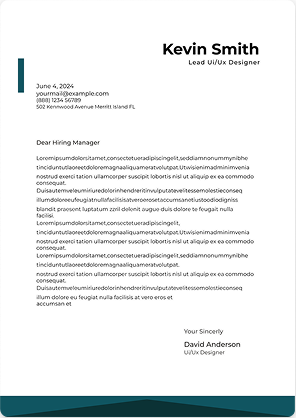
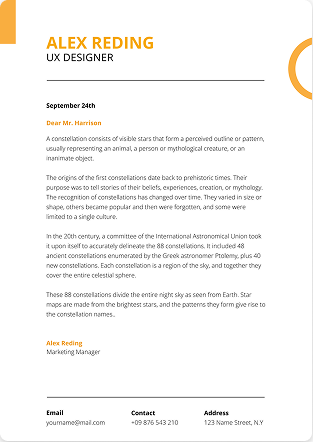
Electrical Engineer Cover Letter Template
Dear Chief Electrical Engineer / VP of Engineering,
I am writing to express my strong interest in the Electrical Engineer position at [Company Name]. As a Licensed Professional Engineer (PE Electrical) with over 8 years of experience designing multi-layer PCBs in Altium Designer, performing ETAP power grid analyses, and achieving 100% first-pass FCC/CE EMC compliance while cutting power usage by 28%, I am eager to contribute to [Company Name].
In my previous role, I programmed C/C++ microcontrollers deployed to 50,000+ units and reduced BOM component costs by $120,000. My focus is on high-speed circuit precision, power system efficiency, and NEC safety compliance.
I look forward to discussing how my electrical design expertise aligns with your hardware innovation goals.
Electrical Engineer Salary Benchmarks & Industry Pay
- Junior Electrical Engineer (EIT): $70,000 – $84,000 per year
- Mid-Level Electrical Engineer (Altium / ETAP): $88,000 – $118,000 per year
- Senior Electrical Engineer (PE Licensed): $125,000 – $155,000 per year
- Chief Electrical Engineer / Engineering Director: $165,000 – $220,000+ per year
Frequently Asked Questions (FAQs)
Q1. What are the top keywords for an Electrical Engineer resume?
Top keywords include: PE Licensed, Altium Designer, ETAP, Embedded C/C++, Microcontrollers (STM32), NEC / NFPA 70E, Single-Line Diagrams, EMC/EMI Compliance, Signal Integrity, and PLC.
Q2. What PCB design software is most preferred by hardware engineering firms?
Altium Designer is the commercial industry leader, followed by Cadence Allegro / OrCAD and open-source KiCAD.
Q3. What is the average salary for PE Licensed Electrical Engineers?
Licensed PE Electrical Engineers earn between $125,000 and $155,000+ per year.
Q4. What is EMC/EMI compliance in electrical engineering?
Electromagnetic Compatibility (EMC) ensures an electrical circuit operates without producing electromagnetic interference (EMI) that violates FCC or CE regulations.
Q5. Is the PE license mandatory for Electrical Engineers?
The PE license is required for signing off on public utility power grid designs and municipal building electrical plans, though optional for consumer tech electronics design.