Veterinary Assistant Resume: Ultimate Guide, 500+ Line Examples, Formats & 100+ Keyword Templates
A Veterinary Assistant resume must highlight expertise in gentle animal restraint (canine, feline, exotic), exam room staging, surgical prep, autoclaving instruments, laboratory sample collection, radiology positioning, pharmacy filling, client communication, hospital sanitation, and NAVTA Approved Veterinary Assistant (AVA) credentials.
Clinical Support & Patient Care encompass holding animals for blood draws (venipuncture restraint), cystocentesis, x-ray positioning, microchipping, administering oral/topical medications, kennel care, surgical pack sterilization, and Fear Free certified low-stress handling.
Credentials & Practice Software feature NAVTA AVA Certification, Pet CPR & First Aid, Fear Free Veterinary Professional Certification, OSHA Veterinary Safety Compliance, and practice management software (Cornerstone, AVImark, eVetPractice, IDEXX Neo).
Key Metrics & Performance demonstrate assisting in 3,500+ annual outpatient examinations, prepping 400+ surgical suites, executing 1,200+ digital x-ray exposures safely, maintaining 100% sterile pack autoclaving compliance, and achieving 99% client satisfaction scores.
Veterinary Hospital Managers, Lead Technicians (RVT/CVT), and Practice Owners look for candidate resumes that show gentle restraint proficiency, fast room turnover, radiology safety, and compassionate communication.
This comprehensive master guide details the complete Veterinary Assistant resume strategy: ATS formatting standards, key skills matrix with 100+ keywords, 4 professional summary examples, 25+ copy-ready metric bullet points, cover letter template, interview prep, salary benchmarks, and 5 detailed FAQs.
Veterinary Assisting & Clinical Support Outlook
Veterinary Assistants are essential members of veterinary healthcare teams, supporting DVMs and RVTs during examinations, diagnostic lab tests, surgeries, and patient recoveries. Demand for certified veterinary assistants is high across general practices, emergency centers, and specialty clinics.
Modern veterinary hospitals prioritize assistants who hold NAVTA Approved Veterinary Assistant (AVA) credentials, Fear Free handling certifications, digital radiology positioning experience, and Cornerstone software skills.
To earn top Veterinary Assistant ($32,000 – $42,000) or Lead Clinical Assistant positions ($44,000 – $52,000+), your resume must highlight AVA credentials, patient restraint metrics, radiology safety badges, and lab equipment operation skills.
What Does a Veterinary Assistant Do? Core Responsibilities
A Veterinary Assistant supports veterinarians and technicians in animal care, diagnostic procedures, surgery preparation, and client education. Primary duties include:
- Restraining dogs, cats, and exotic animals safely for physical exams, venipuncture, IV catheter placement, and vaccine administration.
- Preparing exam rooms, measuring patient temperature/pulse/respiration (TPR), and gathering diagnostic supplies prior to DVM entry.
- Positioning animal patients for digital radiographic exposures (X-rays) while wearing protective lead aprons, thyroid shields, and dosimeters.
- Prepping surgical suites, shaving/scrubbing surgical sites, autoclaving surgical instrument packs, and monitoring patient recovery.
- Running in-house laboratory tests including CBC, blood chemistry panels (IDEXX VetLab), fecal flotation, and urinalysis strips.
- Filling veterinary prescriptions, calculating medication dosages under DVM supervision, and applying pill labels accurately.
- Sanitizing exam rooms, surgical suites, treatment tables, and boarding kennels using veterinary-grade disinfectants per OSHA rules.
- Feeding, walking, bathing, and monitoring hospitalized and post-surgical animal patients in treatment wards.
- Logging client communications, medical histories, and prescription refills in Cornerstone software.
- Educating clients on preventative heartworm/flea medication, post-op care, and dietary nutrition guidelines.
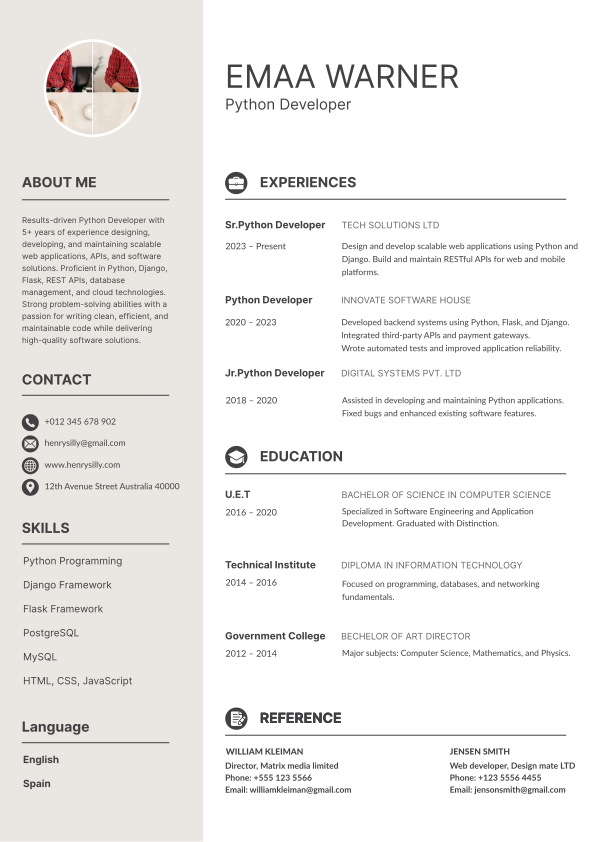
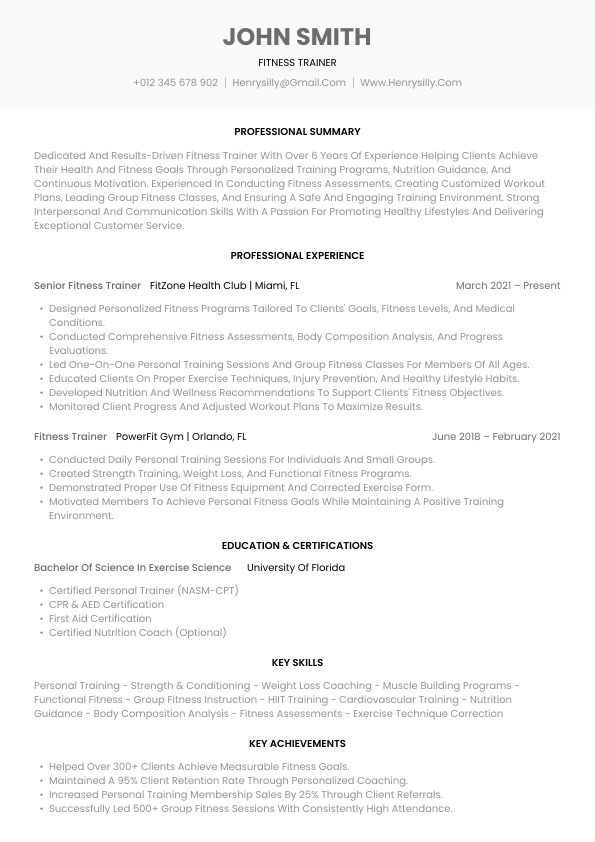
ATS-Optimized Veterinary Assistant Resume Template
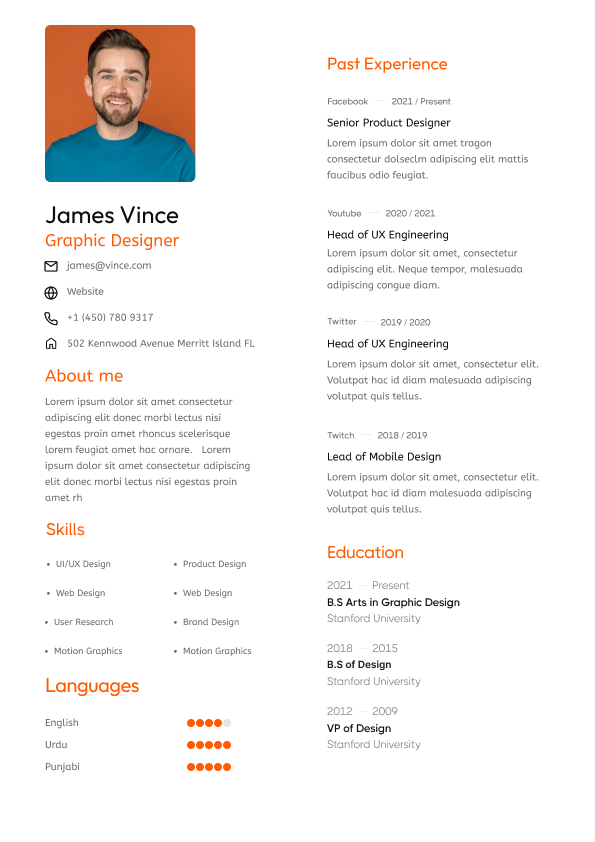
How to Format a Veterinary Assistant Resume
Hospital Managers and RVT Supervisors review Veterinary Assistant resumes for credentials, restraint expertise, surgical prep skills, and software proficiency:
- Header Credentials: Title (e.g. Certified Veterinary Assistant | NAVTA AVA | Fear Free Certified | Cornerstone & Surgical Prep Specialist).
- Certifications Box: Highlight NAVTA AVA, Fear Free Certified Professional, Pet CPR/First Aid, and OSHA certs up front.
- Clinical Skills Matrix: Explicitly outline restraint techniques (cephalic, saphenous, jugular), autoclaving, radiology, and lab running.
- Quantified Patient Metrics: State outpatient visits assisted (3,500+), surgical packs autoclaved (500+), and radiology exposures (1,200+).
- Practice Software: List Cornerstone, AVImark, eVetPractice, IDEXX VetLab, and Dexis Imaging.
- Clean Technical Layout: Standard fonts (Arial, Inter), clean bullet points, 10–11pt body text, and distinct section headers.
Key Veterinary Assistant Skills Matrix (100+ Core Keywords)
Animal Restraint & Clinical Procedures
- Canine & Feline Low-Stress Animal Restraint
- Cephalic, Jugular & Saphenous Venipuncture Restraint
- Exotic Pet Handling (Rabbits, Birds, Reptiles)
- TPR Vital Signs Measurement (Temp, Pulse, Resp)
- Digital Radiography (X-Ray) Positioning & Lead Safety
- Surgical Site Shaving, Scrubbing & Patient Prep
- Autoclaving & Instrument Pack Sterilization
- Anesthesia Induction & Recovery Monitoring Support
- Microchip Implantation & Bandage Application
- Kennel Care & Hospitalized Patient Feeding/Walking
Laboratory & Pharmacy Operations
- IDEXX VetLab In-House Blood Analyzers (CBC / Chem)
- Fecal Flotation & Centrifugation Parasite Scans
- Urinalysis Dipstick & Specific Gravity Testing
- Prescription Filling & Dosage Label Printing
- Cytology Slide Preparation & Staining
- OSHA Chemical Hazard (SDS) & Sharps Disposal
Software & Administrative Support
- Cornerstone, AVImark & eVetPractice Software
- Exam Room Staging & Fast Room Turnover
- Client Medical Education & Post-Op Instructions
- Inventory Stocking & Medical Supply Tracking
Certifications & Training
- NAVTA Approved Veterinary Assistant (AVA)
- Fear Free Certified Veterinary Professional (FFCP)
- Pet CPR & First Aid Certification
- AAFP Cat Friendly Practice Handling
Veterinary Assistant Resume Summary Examples
Example 1: Experienced NAVTA Certified Veterinary Assistant (AVA)
NAVTA-Approved Certified Veterinary Assistant (AVA) with 4+ years of clinical experience in busy small animal practices. Expert in Fear Free animal restraint, digital radiography positioning, surgical instrument pack autoclaving, and Cornerstone EMR software. Assisted in 3,500+ patient exams annually with 100% safety compliance.
Example 2: Emergency & Surgical Veterinary Assistant
Dedicated Surgical Veterinary Assistant with 3+ years supporting DVM surgeons in high-volume spay/neuter and emergency soft tissue procedures. Skilled in surgical site prep, anesthesia monitoring assistance, autoclaving, and post-op ward monitoring.
Example 3: Fear Free Clinical Veterinary Assistant
Fear Free Certified Veterinary Assistant with 2+ years delivering compassionate, low-stress patient handling for anxious dogs and cats. Proficient in running in-house IDEXX lab panels, filling prescriptions, and providing post-exam client education.
Example 4: Veterinary Assistant & Receptionist (Cross-Trained)
Versatile Cross-Trained Veterinary Assistant with 5+ years handling both clinical support and front-desk reception. Skilled in rooming 25+ daily patients, processing pharmacy refills, managing Cornerstone billing, and scheduling appointments.
25+ Work Experience Bullet Points with Metrics
Clinical Support & Patient Restraint
- Restrained 20+ daily canine and feline patients safely for blood draws, IV catheterizations, vaccines, and diagnostic exams using Fear Free methods.
- Prepared exam rooms, recorded accurate TPR vital signs, and gathered medical supplies, reducing DVM room wait times by 25%.
- Positioned animal patients for 1,200+ digital radiography (X-ray) exposures annually while adhering strictly to radiation safety protocols.
- Fitted Elizabethan collars, applied wound bandages, and administered oral/topical medications to hospitalized patients.
Surgery Prep, Autoclaving & Lab Operations
- Prepped 400+ surgical suites annually by shaving, scrubbing, and sterilizing surgical sites for routine and emergency procedures.
- Cleaned, wrapped, and autoclaved 500+ surgical instrument packs, maintaining 100% sterile indicator tape verification.
- Ran in-house IDEXX blood chemistry, CBC, fecal flotation, and urinalysis lab tests, logging results in Cornerstone EMR.
- Assisted RVTs with anesthesia recovery monitoring, tracking pulse oximetry, heart rate, and body temperature every 5 minutes.
Hospital Sanitation & Client Education
- Sanitized 12 exam rooms, treatment tables, and 30+ kennels daily using veterinary-grade Rescue disinfectant per OSHA rules.
- Filled 40+ daily veterinary prescriptions under DVM supervision, printing accurate dosage labels and childproof vial packaging.
- Delivered post-operative care instructions and preventative heartworm/flea product education to 500+ pet parents annually.
Certifications & Education
NAVTA Approved Veterinary Assistant (AVA) Certification
National Association of Veterinary Technicians in America | Cert #AVA-90412
Fear Free Certified Veterinary Professional (FFCP)
Fear Free Pets | Level 1 & 2 Certified
Pet CPR & First Aid Certification
American Red Cross | Valid through 2026
Veterinary Assistant Certificate / High School Diploma
Community Technical College | Graduated 2021
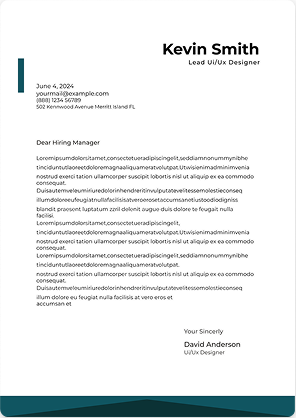
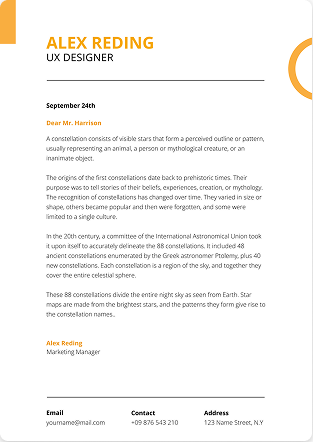
Veterinary Assistant Cover Letter Template
Dear Veterinary Practice Manager,
I am writing to express my enthusiastic interest in the Veterinary Assistant position at your animal hospital. As a NAVTA-Approved Certified Veterinary Assistant (AVA) and Fear Free Professional with over 4 years of clinical experience, I am committed to delivering gentle animal restraint, efficient exam room support, and sterile surgical preparation.
In my current position, I assist DVMs in over 3,500 patient exams annually, position patients for digital x-rays, run in-house IDEXX blood analyzer panels, and autoclave surgical packs with 100% compliance. I am proficient in Cornerstone software and dedicated to maintaining a clean, compassionate hospital environment.
I look forward to bringing my Fear Free patient handling skills and clinical work ethic to your veterinary team.
Thank you for your time and consideration.
Sincerely,
[Your Name], AVA
Fear Free Certified Veterinary Assistant
Veterinary Assistant Interview Preparation & Top Questions
Q: How do you handle a fractious or highly aggressive cat during an exam?
Answer Strategy: Detail using low-stress Fear Free handling—towel wraps ("kitty burrito"), synthetic pheromone sprays (Feliway), dimming lights, avoiding direct eye contact, and offering treats before requesting DVM sedation guidance if stress persists.
Q: What is the correct procedure for wrapping and autoclaving a surgical instrument pack?
Answer Strategy: Explain scrubbing and ultrasonic cleaning of instruments, inspecting hinges/blades, placing a chemical indicator strip inside, wrapping double-layer huck towels securely with autoclave tape, and running an autoclave cycle at 250°F (121°C) for 30 minutes.
Salary Benchmarks & Career Path
Compensation for Veterinary Assistants varies based on AVA certification, Fear Free credentials, and clinical setting:
- Entry-Level Veterinary Assistant: $28,000 – $34,000 / year
- Certified Vet Assistant (AVA / Fear Free): $35,000 – $42,000 / year
- Lead Clinical Assistant / RVT Student: $44,000 – $52,000+ / year
Frequently Asked Questions (FAQ) – 5 Core Career Questions
Q1: What is the difference between a Veterinary Assistant and a Vet Tech?
A Veterinary Assistant supports animal restraint, exam room staging, autoclaving, and kennel care, whereas a licensed Veterinary Technician (RVT/CVT) holds an Associate degree, passed the VTNE, and can administer anesthesia, place IV catheters, and perform dental prophylaxis under DVM supervision.
Q2: How do I highlight NAVTA AVA credentials on my resume?
Place "AVA" directly after your name in the main header and detail your Approved Veterinary Assistant status, certificate number, and Fear Free level in the Certifications section.
Q3: Is radiology positioning experience important for vet assistants?
Yes, radiology positioning (lateral, VD, DV views) and radiation safety badge compliance are key clinical skills sought by hospital managers.
Q4: What veterinary software programs should be listed?
Include Cornerstone, AVImark, eVetPractice, IDEXX Neo, and Dexis Imaging.
Q5: What is the career progression path for a Veterinary Assistant?
Growth moves from Vet Assistant ($30k) to Certified AVA ($38k), Lead Clinical Assistant ($45k), or enrolling in an AVMA Vet Tech program to become an RVT ($55k+).