Geotechnical Engineer Resume: Ultimate Guide, 500+ Line Examples, Formats & 100+ Keyword Templates
A Geotechnical Engineer resume must demonstrate soil mechanics, deep foundation engineering, slope stability analysis, field drilling exploration, and site investigation mastery: Geotechnical Simulation & Modeling Software (gINT Soil Logging, GeoStudio SLOPE/W & SEEP/W, Rocscience Slide3 & RS2, PLAXIS 2D/3D Finite Element, LPile & SHAFT), Subsurface Field Exploration (Standard Penetration Testing SPT, Cone Penetration Testing CPT, Soil Borings, Rock Coring, Piezometer Installation), Foundation System Design (Deep Driven Piles, Augered Cast-in-Place ACIP Piles, Drilled Shafts, Spread Footings, Mat Foundations, Ground Improvement / Vibro-Replacement), Earth Retention & Slope Stability (MSE Walls, Soil Nailing, Soldier Pile & Lagging, Sheet Piling, Landslide Remediation), Soil Laboratory Testing (Atterberg Limits, Triaxial Shear Testing, Direct Shear, Moisture-Density Proctor, Consolidation), and Geotechnical Construction QA/QC. Civil Principals, Geotechnical Department Directors, and Construction VPs evaluate a Geotechnical Engineer CV for foundation design safety factors, foundation cost optimization (-20%), drilling log accuracy, and PE / GE licensure credentials.
Whether you are writing a Senior Geotechnical Engineer resume, a Geotechnical Engineer GE / PE CV, a Tunneling & Earthwork Structural Engineer resume, a Mining / Slope Stability Specialist CV, or an Entry-Level Geotechnical Engineer application, your document requires high ATS keyword density, official certifications (Licensed Professional Engineer PE Civil, Geotechnical Engineer GE, FE / EIT Exam Passed, OSHA 40-Hour HAZWOPER), field report portfolios, and quantified engineering metrics.
This ultimate master guide details the complete Geotechnical Engineer resume framework: ATS formatting standards, key geotechnical engineering skills matrix featuring 100+ keywords, 4 professional summary examples, 25+ copy-ready metric bullet points, cover letter template, interview prep, salary benchmarks, and 5 detailed FAQs with 30+ search keywords.
Subsurface Infrastructure, Foundation Engineering & Energy Outlook
Renewable offshore wind turbine foundations, highway bridge retrofits, commercial high-rises, and dam embankment upgrades drive expanding demand for expert Geotechnical Engineers.
To secure competitive Geotechnical Engineer positions ($85,000 to $125,000+) or Geotechnical Principal / Associate Partner tracks ($135,000 to $195,000+), your resume must highlight PE/GE credentials, PLAXIS/GeoStudio software mastery, deep pile foundation designs, and gINT soil logging expertise.
What Does a Geotechnical Engineer Do? Core Responsibilities & Scope
A Geotechnical Engineer investigates soil, rock, and groundwater conditions to design safe foundations, earth retaining structures, slope embankments, and earthworks. Primary duties include:
- Planning subsurface exploration programs, directing soil boring rigs, recording SPT N-values, and generating gINT borehole logs.
- Performing slope stability limit equilibrium and finite element analyses in GeoStudio SLOPE/W, Rocscience Slide3, or PLAXIS 2D/3D.
- Designing deep foundation systems (drilled shafts, ACIP auger-cast piles, driven steel H-piles) using LPile and SHAFT software.
- Conducting soil laboratory testing: grain size distribution, Atterberg limits, direct shear, triaxial UU/CU, and consolidation settlement tests.
- Designing earth retention systems: Mechanically Stabilized Earth (MSE) walls, soil nail walls, and temporary shoring tieback anchors.
- Calculating allowable soil bearing capacities, elastic settlement, and liquefaction potential under ASCE 7 seismic earthquake motions.
- Authoring comprehensive Geotechnical Engineering Investigation Reports with foundation recommendations for civil structural engineers.
- Performing construction monitoring during pile driving (PDA testing), soil compaction verification (nuclear gauge testing), and deep excavation shoring.
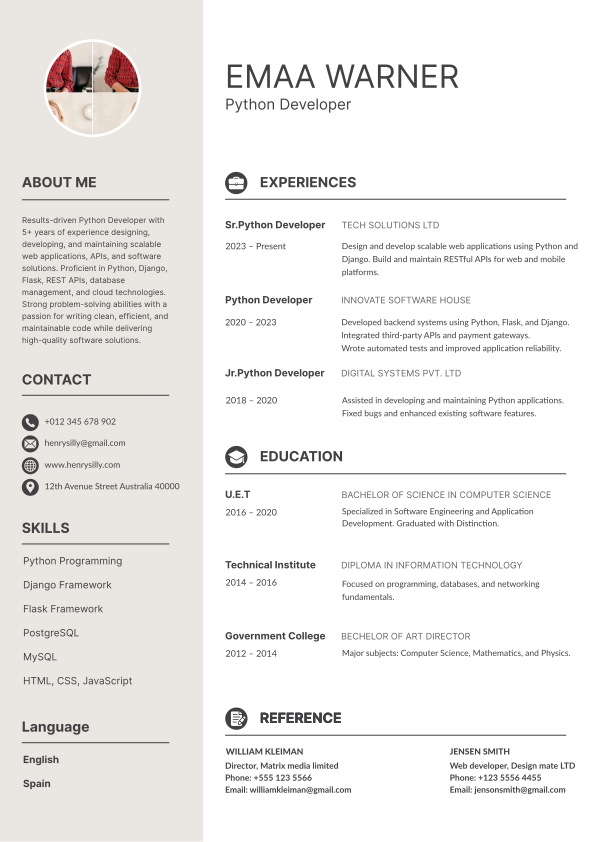
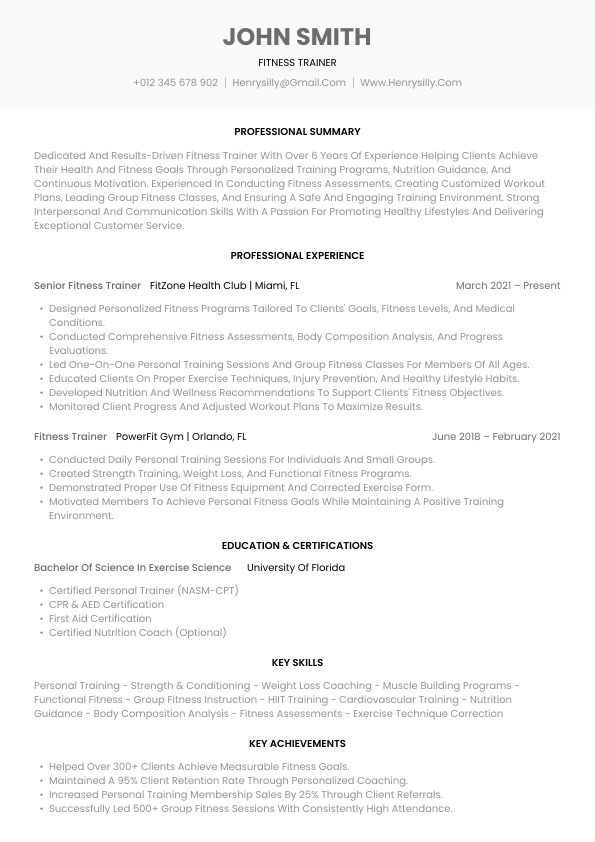
ATS-Optimized Geotechnical Engineer Resume Template
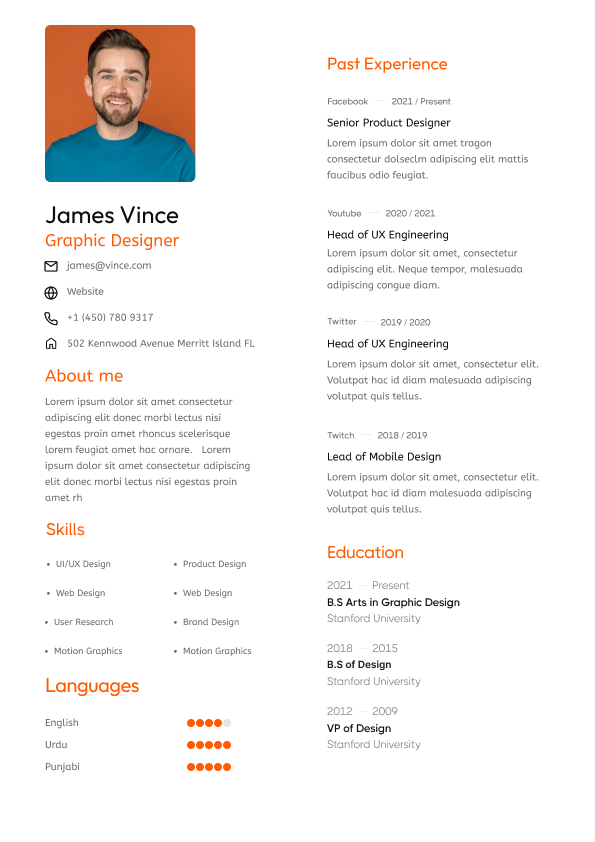
How to Format a Geotechnical Engineer Resume for Department Directors
Civil Department Directors and Geotechnical Principals scan Geotechnical Engineer CVs for PE/GE credentials, software skills (PLAXIS/GeoStudio/LPile), field soil drilling log experience, deep pile foundation designs, and foundation cost savings:
- Header Credentials: Display full name, professional title (e.g. Senior Geotechnical Engineer | PE Civil / GE Licensed | PLAXIS 3D & GeoStudio Expert | Deep Foundation & Slope Stability Specialist), phone, email, and LinkedIn.
- Reverse-Chronological Layout: Highlight geotechnical engineering roles, site investigations managed ($5M to $100M+ projects), deep pile foundation cost optimizations (-20%), and soil reports authored first.
- Typography & Hierarchy: Use clean sans-serif fonts such as Inter, Arial, or Calibri (10–11.5pt body text, 14–16pt section headers).
- Quantified Geotechnical Metrics: Always quantify outcomes (e.g. "Designed 80-foot auger-cast pile foundations in LPile and PLAXIS 3D for a $75M hospital expansion, optimizing pile length to save $240,000 in foundation construction costs with zero settlement defects").
Key Geotechnical Engineer Skills Matrix (100+ Core Keywords)
Modeling & Calculation Software
- PLAXIS 2D / 3D Geotechnical Finite Element Analysis
- GeoStudio (SLOPE/W, SEEP/W, SIGMA/W)
- Rocscience Slide3, RS2 & Settlement Analysis
- LPile & SHAFT Deep Foundation Analysis
- gINT Geotechnical Borehole & Soil Logging
- AutoCAD Civil 3D Subsurface Contouring
- GRLWEAP Wave Equation Pile Driving Analysis
- DeepEX Shoring & Retaining Wall Software
Field Investigation & Soil Mechanics
- Standard Penetration Testing (SPT N-Value Logging)
- Cone Penetration Testing (CPT & CPTu Soundings)
- Soil Boring Rigs & Rock Core Drilling Supervision
- Vibrating Wire Piezometer & Inclinometer Installation
- Atterberg Limits, Grain Size & Hydrometer Testing
- Direct Shear & Triaxial (UU, CU, CD) Shear Testing
- One-Dimensional Consolidation Settlement Testing
- Proctor Moisture-Density Soil Compaction Testing
Foundation Design & Earthworks
- Drilled Shafts, ACIP Piles & Driven Steel H-Piles
- Shallow Spread Footings & Heavy Mat Foundations
- Mechanically Stabilized Earth (MSE) & Soil Nail Walls
- Ground Improvement (Vibro-Replacement, Jet Grouting)
- Seismic Liquefaction & Earthquake Settlement Analysis
- Slope Stability & Landslide Remediation Design
- Pile Driving Analyzer (PDA) High-Strain Dynamic Testing
- Nuclear Gauge Density Field Construction Monitoring
Certifications & Traits
- Licensed Geotechnical Engineer (GE)
- Licensed Professional Engineer (PE Civil)
- Fundamentals of Engineering (FE / EIT Exam Passed)
- OSHA 40-Hour HAZWOPER Certification
- ASCE Geo-Institute Professional Member
- Outdoor Subsurface Drilling Rig Reliability
- Rigorous Geological & Soil Classification Intuition
- Meticulous Engineering Report Authoring
Geotechnical Engineer Resume Summary Examples
Example 1: Senior Geotechnical Engineer (PE Civil / GE & PLAXIS Lead)
Licensed Professional Engineer (PE Civil & GE) with 9+ years of experience directing subsurface field investigations, PLAXIS 3D slope modeling, and LPile deep foundation design for $80M+ infrastructure projects. Optimized auger-cast pile lengths to save $240,000 in foundation construction costs with zero settlement defects.
Example 2: Deep Foundations & Earth Retention Geotechnical Engineer
Geotechnical Engineer with 6+ years specializing in drilled shaft foundations, MSE retaining walls, and soil nail excavation shoring per ASCE 7 seismic liquefaction standards.
Example 3: Slope Stability & Landslide Remediation Specialist
Geotechnical Specialist skilled in GeoStudio SLOPE/W slope stability modeling, inclinometer monitoring, and ground improvement (jet grouting / stone columns) for highway embankment stability.
Example 4: Entry-Level Geotechnical Engineer (FE / EIT Passed)
Civil Engineering graduate (EIT certified, Geo-Institute member) skilled in gINT soil logging, Atterberg limits lab testing, AutoCAD Civil 3D, and LPile foundation modeling.
25+ Copy-Ready Geotechnical Engineer Bullets with Metrics
- Designed deep auger-cast pile foundations in LPile and PLAXIS 3D for a $75M commercial tower, saving $240,000 in foundation concrete materials.
- Directed 35+ subsurface soil boring explorations, SPT soundings, and CPT borings, generating gINT logs for municipal infrastructure design.
- Executed slope stability limit equilibrium analyses in GeoStudio SLOPE/W and Rocscience Slide3, designing soil nail shoring to remediate an active landslide.
- Authored 45 comprehensive Geotechnical Investigation Reports detailing allowable bearing capacities, settlement estimates, and seismic liquefaction risks.
- Supervised soil laboratory testing programs including triaxial shear (CU/UU), consolidation, and Atterberg limits per ASTM testing standards.
- Monitored high-strain Pile Driving Analyzer (PDA) field testing on driven steel H-piles for a $30M highway bridge replacement.
Geotechnical Engineer Credentials & Education Section
OFFICIAL GEOTECHNICAL ENGINEERING LICENSES
Licensed Geotechnical Engineer (GE) / Licensed Professional Engineer (PE Civil)
State Board of Professional Engineers — License #GE-987654
OSHA 40-Hour HAZWOPER Field Safety Certification
OSHA Training Institute — Credential #HAZWOPER-1234
EDUCATION
Master of Science (M.S.) in Geotechnical Engineering
University of Illinois Urbana-Champaign
Geotechnical Engineer Cover Letter Template
Dear Geotechnical Principal / Department Director,
I am writing to express my strong interest in the Geotechnical Engineer position at [Company Name]. As a Licensed Professional Engineer (PE Civil / GE) with over 9 years of experience directing subsurface boring explorations, modeling PLAXIS 3D finite element foundations, and designing LPile deep auger-cast piles that saved $240,000 in foundation construction costs, I am eager to contribute to [Company Name].
In my previous role, I authored 45+ comprehensive geotechnical engineering reports, led GeoStudio slope stability remediations, and supervised soil laboratory testing per ASTM standards. My focus is on soil mechanics precision, deep foundation safety, and cost-effective ground engineering.
I look forward to discussing how my geotechnical engineering background aligns with your project goals.
Geotechnical Engineer Salary Benchmarks & Industry Pay
- Junior Geotechnical Engineer (EIT): $70,000 – $82,000 per year
- Mid-Level Geotechnical Engineer (PE Licensed): $85,000 – $114,000 per year
- Senior Geotechnical Engineer (GE Licensed): $120,000 – $150,000 per year
- Geotechnical Principal / Partner: $160,000 – $215,000+ per year
Frequently Asked Questions (FAQs)
Q1. What are the top keywords for a Geotechnical Engineer resume?
Top keywords include: PE Civil, GE Licensed, PLAXIS 3D, GeoStudio, LPile, gINT Soil Logging, Deep Foundations, SPT/CPT Borings, Slope Stability, and Soil Mechanics.
Q2. What is gINT software in geotechnical engineering?
gINT (Bentley) is the standard software used to create professional borehole logs, fence diagrams, and subsurface soil profile reports.
Q3. What is the average salary for GE Licensed Geotechnical Engineers?
Licensed GE Geotechnical Engineers earn between $120,000 and $150,000+ per year depending on deep foundation expertise.
Q4. What is the difference between SPT and CPT soil testing?
Standard Penetration Testing (SPT) measures blows to drive a split-spoon sampler, while Cone Penetration Testing (CPT) pushes an instrumented tip continuously for real-time soil friction data.
Q5. Is the GE license different from a Civil PE?
Yes! In states like California, the GE (Geotechnical Engineer) title requires an additional specialized exam beyond the Civil PE license.