Transportation Resume: Best Examples, Skills & Templates
Transportation professionals move people and goods from place to place, whether as truck drivers, pilots, or train operators. A successful transportation resume must showcase your industry-specific skills such as logistics management, route planning, and safety compliance along with your experience handling cargo and fleets.
Think of your resume as a roadmap: it should have clear sections for your header (name and contact), a strong summary, work history, skills, and education. Tailoring each section with the right keywords and achievements ensures your resume stands out to recruiters and Applicant Tracking Systems (ATS).
Structuring Your Transportation Resume
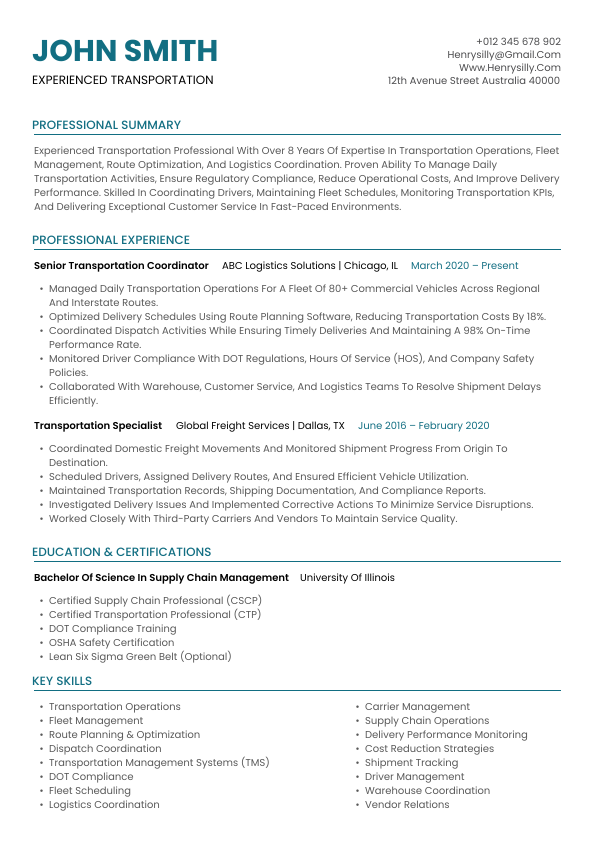
Your transportation resume should follow a clear, consistent format. In most cases, a reverse-chronological format (listing jobs from most recent) is "your best bet", since recruiters and ATS both expect standard sections. The main sections to include are:
- Header: Your name, professional title (e.g. Transportation Specialist), and contact details. Include your location if relevant (city, state) and a professional email.
- Professional Summary/Profile: A brief 3–4 line introduction that highlights your experience and goals. Introduce yourself and explain why you're the right person for the job (for example, "Experienced logistics coordinator with 5+ years of freight management").
- Work Experience: List your past jobs in reverse order, using bullet points to highlight achievements. Start each bullet with a strong action verb and quantify results when possible (e.g. "Optimized delivery routes, reducing fuel use by 15%").
- Skills: An at-a-glance list of your key abilities. Include both technical skills (logistics coordination, fleet management, GPS navigation, etc.) and soft skills (communication, organization). For instance, mention skills like route optimization, dispatch operations, and safety compliance alongside team leadership and customer service. This is also a prime spot to insert relevant keywords from the job listing (such as logistics, cargo handling, regulatory compliance, etc.) to appease both recruiters and ATS.
- Education & Certifications: List your highest education first. For transportation roles, also include relevant certifications. Common examples are a Commercial Driver’s License (CDL), Certified Transportation Professional (CTP), or any logistics management credentials. These details immediately signal your qualifications in the field.
- Additional Sections (optional): If space allows, add sections like Languages or Volunteer Work to stand out. Being multilingual can improve communication across regions, and listing volunteer experience (e.g. community transport initiatives) shows teamwork and leadership. You could also include an Accomplishments section for quantifiable highlights (e.g. “100+ trucks dispatched without incident in 2025”).
By following this structure and emphasizing transportation-related terms (for example, logistics, fleet, routes, safety, DOT regulations), your resume will be both readable and optimized for the industry.
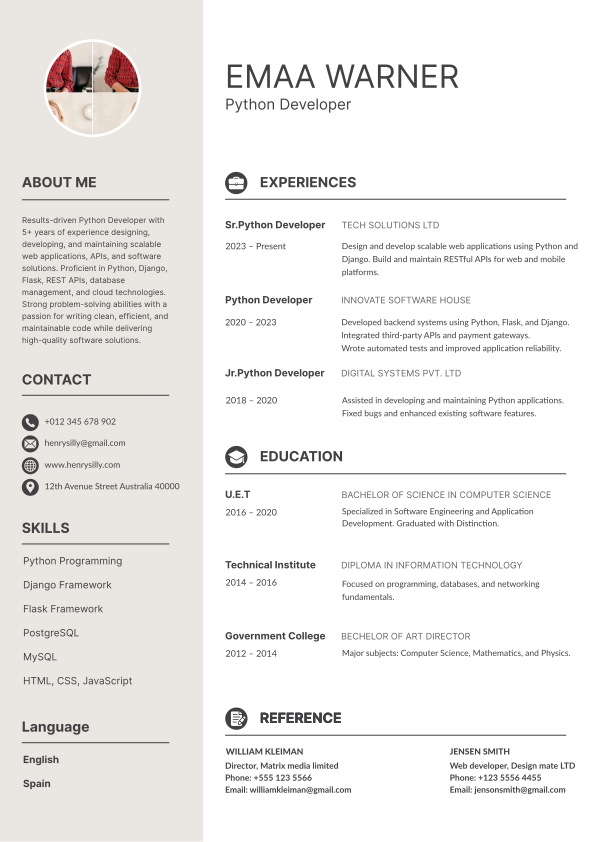
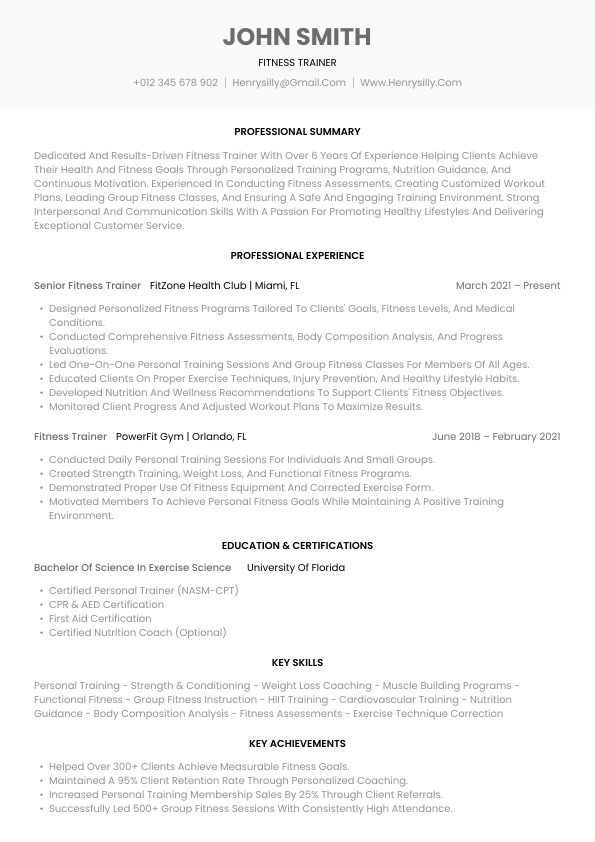
Transportation Resume Template
Crafting a Compelling Summary
Your Professional Summary (or resume objective) is crucial. Keep it short (3–4 lines) and impactful. Introduce yourself and your career focus, then highlight a key achievement or strength. For instance:
- Overview sentence: State your role and experience ("Seasoned Transportation Specialist with 8 years in freight logistics").
- Achievement highlight: Mention a quantifiable success ("Cut delivery costs by 12% through route optimization").
- Personal touch: Note what drives you or your expertise ("Passionate about on-time delivery and safety compliance").
This structure (career overview + success story + personal note) is recommended in sample guides. Tailor the summary to each job by mirroring its language: if the posting mentions logistics coordination, cost reduction, safety be sure those words appear in your summary. For example, one sample resume summary reads: "Dynamic transportation professional with 8+ years of experience in logistics and supply chain management. Proven ability to optimize routes, reduce costs, and ensure regulatory compliance." Such a summary immediately tells employers you have the exact background they want.
Detailing Your Work Experience
In the Work Experience section, focus on achievements rather than duties. Each entry should include your job title, employer, location, and dates.
Use bullet points to describe what you did and how it benefited the company. Always start bullets with an action verb (e.g. coordinated, managed, implemented). For example:
- "Managed daily routes for a fleet of 50+ vehicles, achieving a 98% on-time delivery rate and cutting average fuel consumption by 10%."
- "Implemented an inventory tracking system that reduced lost shipments by 20%."
This approach shows recruiters you understand industry challenges (traffic, scheduling, cargo handling) and have taken concrete steps to solve them.
Whenever possible, include numbers (percentages, dollar savings, shipment counts) to quantify your impact. This technique (sometimes called the STAR method) is a proven way to demonstrate success on a resume.
Highlighting Skills and Keywords
The Skills section is your chance to list critical abilities for a transportation role. Include a mix of hard and soft skills:
- Technical/Industry skills: Logistics planning, fleet management, route optimization, cargo handling, GPS navigation, inventory control, DOT regulatory compliance, safety procedures, hazmat certifications, equipment maintenance, etc.
- Soft skills: Communication, teamwork, problem-solving, attention to detail, time management, customer service.
For example, a skills bullet list might include "Fleet Management, Route Planning, Regulatory Compliance, Customer Service, Time Management, Safety Protocols". As one expert guide notes, "No matter what area of transportation you work in, you need attention to detail, focus and commitment to safety and protocol".
Use this section to weave in the keywords from the job ad (e.g. "logistics", "dispatch operations", "traffic planning"), which helps you pass ATS filters. Remember, ATS scanners look for exact phrases from the job description, so including them here (in context) can make a big difference.
Education and Certifications
List your degrees and school names in reverse chronological order. If you have a relevant college degree (e.g. in transportation, supply chain, business), include it first. If you're entry-level, put your graduation date to show recency. Then highlight any certifications or training: for transportation resumes these can be critical. Common ones include:
- Commercial Driver's License (CDL) – shows you can legally drive commercial vehicles
- Certified Transportation Professional (CTP) or Transportation Management Professional (TMP) – industry credentials
- Logistics or Supply Chain Certifications (e.g. APICS, Georgia Tech)
Even a high-school diploma can be listed if you have limited higher education. Including these qualifications tells employers you meet basic requirements and have specialized knowledge, which is especially important for roles like truck driver, dispatcher, or fleet manager.
Formatting and Design Tips
A clean, professional layout makes your resume easy to read. Use standard 1-inch margins and a simple font (Arial, Calibri, or Georgia). Break sections with clear headings, and leave ample white space.
Avoid long paragraphs bullet lists are your friend. As one guide advises: keep it "clean, neat and organized so recruiters can quickly scan". Bold your section titles (e.g. Experience, Skills) and maybe use one accent color (in headings or lines) for visual appeal. A well-designed resume suggests you're organized and detail-oriented.
Also ensure your resume is ATS-friendly: stick to a single column format, use standard section titles (Experience, Skills, etc.), and avoid graphics or complex tables that scanners might skip. If possible, save and submit your resume as a PDF to preserve layout.
Frequently Asked Questions (FAQs)
Q1. What should I include in a transportation resume?
A transportation resume should include your contact information, professional summary, work experience, relevant skills, education, certifications, and measurable achievements. Be sure to highlight logistics, route planning, fleet management, and safety compliance if applicable.
Q2. How can I make my transportation resume ATS-friendly?
Use a clean resume format, standard section headings, and keywords from the job description. Include industry-specific terms like logistics, transportation management, fleet management, and regulatory compliance to improve ATS compatibility.
Q3. What skills are important for a transportation resume?
Key skills include route planning, logistics coordination, fleet management, inventory control, GPS navigation, safety compliance, communication, problem-solving, time management, and teamwork.
Q4. How long should a transportation resume be?
A one-page resume is ideal for entry-level and mid-level professionals. If you have over 10 years of relevant experience or extensive certifications, a two-page transportation resume is acceptable.
Q5. Where can I create a professional transportation resume?
You can create a professional, ATS-friendly transportation resume with AI Resume Lab, which offers AI-powered writing suggestions, customizable resume templates, resume examples, and an ATS resume checker to help you stand out to employers.
Final Words
A well-crafted transportation resume showcases your skills, experience, and achievements while staying ATS-friendly. Tailor it to each job, highlight measurable results, and include relevant industry keywords to improve your chances of landing interviews. With AI Resume Lab, you can build a professional, job-winning transportation resume quickly using AI-powered writing assistance, expert templates, and an ATS resume checker.