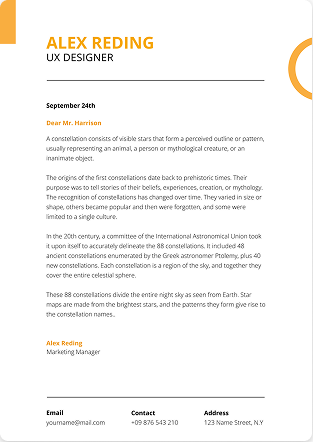

"Do tech companies even read cover letters?" every developer asks this, and the honest answer is: about half do. But here's the part that matters: when they do read one, it's usually at the decision margin two similar resumes, one interview slot. A sharp cover letter is the tiebreaker you control.
And in tech specifically, most cover letters are terrible generic templates, restated resumes, zero technical substance. That's your opening. Below all points shows you the exact structure, real examples for developers, QA, and IT roles, and the mistakes that get applications silently dropped.
Do Tech Jobs Really Need a Cover Letter?
The practical rules:
Posting says "optional" — send one anyway; optional is a filter for effort
Posting requires it — obviously send it, and tailor it (they'll check)
No field for it — put a trimmed 3–4 line version in the application's message box or email body
Startups and small teams — cover letters matter MORE here; the founder or lead often reads applications personally
Big tech / recruiter pipelines — matters less at screening, but gets read before onsite decisions
The rule of thumb: a cover letter can't fix a weak resume, but it regularly breaks ties between strong ones.
ATS-Friendly Resume Guide
4 Paragraph Tech Cover Letter Structure
Keep it under one page 250–350 words. Recruiters skim; hiring managers read. However structure serves both:
Paragraph 1 — The Hook (2–3 lines)
Name the role, show you know the company, and lead with your strongest relevant fact. Never open with "I am writing to apply for..."
❌ "I am writing to express my interest in the Backend Developer position."
Your posting for a Backend Developer caught my attention because I've spent the last three years solving exactly this problem scaling Laravel APIs past the point where they usually fall over. At my current company, that meant taking a checkout from 800ms to 120ms during our busiest quarter."
Paragraph 2 — Proof You Can Do This Job (4–6 lines)
Pick 1–2 achievements that map directly to the posting's top requirements. Numbers are mandatory. This is not a resume summary it's a targeted argument:
"You mention real-time features and WebSocket experience. I built the live-notification system at BrightStack serving 20K concurrent users on Laravel Echo shipped in six weeks, running at 99.9% uptime since. I also see you're mid-migration from a legacy PHP codebase; I led an identical PHP 7-to-Laravel migration across 2M records with zero data loss, so I know where the bodies are buried in that process."
Paragraph 3 — Why This Company (2–4 lines)
The paragraph most candidates fake and every reader can tell. Reference something real: their product, stack, engineering blog, open-source work, or mission and connect it to you:
"I've followed your engineering blog since the post on queue architecture, and I use your open-source rate-limiting package in two of my own projects. The chance to work on infrastructure I already respect and contribute back is the reason this application is one of three I'm sending this month, not thirty."
Paragraph 4 — The Close (1–2 lines)
Confident, brief, forward-moving. No begging, no "I hope."
"I'd welcome the chance to walk you through the migration playbook I mentioned. Thanks for your time — my resume, GitHub, and portfolio are attached."
Tech Cover Letter Examples by Role
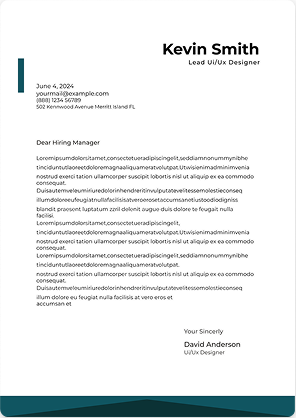
Software Developer Cover Letter Example (Full)
Dear [Hiring Manager's name find it on LinkedIn; "Dear Hiring Team" only as last resort],
Your Python Developer opening stood out because it asks for exactly the intersection I work in: Django backends with heavy data pipelines. For the past four years at TechNova, I've owned both, most recently rebuilding our ETL layer in Airflow to process 10M+ daily events, 40% faster and $50K/year cheaper than the system it replaced.
Two things in your posting map directly to my work.
First, API performance: I cut our core endpoint latency from 800ms to 120ms through query optimization and Redis caching, under production load.
Second, testing culture: I introduced pytest-based TDD to a team that had 45% coverage and left it at 90%, which cut regression bugs in half. Your job description reads like the last two years of my commit history.
I've used [Product] since its beta and wrote about your public API on my blog last year the engineering decisions behind your rate-limiting design are part of why I want to build here rather than anywhere hiring Python developers this quarter.
I'd love to show you the pipeline architecture I described. Thanks for your time resume and GitHub attached.
[Name] | [email] | [GitHub] | [portfolio]
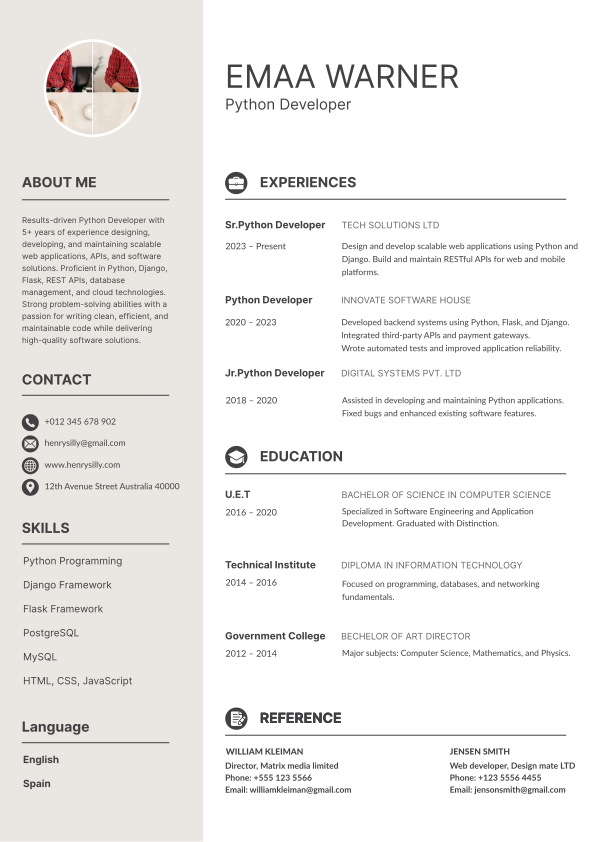
Python Developer Resume", "PHP Developer Resume", "Laravel Developer Resume
QA / Quality Analyst Cover Letter — Key Paragraph
"Your posting emphasizes regression coverage for rapid releases. In my current role I executed 1,200+ test cases across 6 releases, held a 98% valid-defect rate in JIRA, and cut regression cycle time 35% by prioritizing automation candidates the same release cadence challenge your team is scaling into."
Quality Analyst Resume
Junior / Fresher Tech Cover Letter — Key Paragraph
No experience? Sell projects and trajectory:
"While this would be my first full-time role, I've shipped six Laravel projects in the past year — including a job board serving 500+ real users — with tests, CI, and documented repos. I learn in public: my GitHub shows 300+ contributions this year, and my open-source invoice package has 400 stars. What I lack in tenure I make up for in shipping habits."
"Resume with No Experience"
Career-Changer Cover Letter — Key Paragraph
"I spent five years as a quality analyst before moving into development, which means I write code the way testers wish developers would with edge cases and failure modes in mind from line one. My transition portfolio includes three production-grade projects, and my QA background shows in their 85%+ test coverage."
How to Tailor a Cover Letter in 10 Minutes (Per Application)
The tailoring workflow that makes one strong base letter work everywhere:
Read the posting, highlight the top 3 requirements (2 min)
Swap paragraph 2's achievements to match those exact requirements (3 min)
Rewrite paragraph 3 with one real, specific company fact — product, blog post, stack, funding news (3 min)
Find the hiring manager's name on LinkedIn or the team page (1 min)
Update the file name: firstname-lastname-cover-letter-companyname.pdf (1 min)
Paragraphs 1 and 4 barely change. This is how you send tailored letters without spending an hour each.
Formatting Rules for Tech Cover Letters
Length: 250–350 words, never over one page
File: PDF, matching your resume's font and header for a consistent "document set"
Tone: professional but human — write like a competent colleague, not a Victorian butler ("I wish to express my sincerest enthusiasm...")
Links: include GitHub/portfolio in your sign-off; make proof one click away
Email applications: the email body IS the cover letter — don't attach a letter AND write a long email; pick one
Keywords: mirror 3–5 exact terms from the posting; some ATS systems scan cover letters too
7 Cover Letter Mistakes That Kill Tech Applications
Restating your resume — the letter argues fit; the resume lists facts. If a line appears in both, cut it from the letter
Generic company praise — "your innovative company culture" tells the reader you sent this to 40 companies
Apologizing — "although I don't have much experience..." Never open with your weakness; frame forwardWall of buzzwords — "passionate, driven, detail-oriented team player" is filler in every industry, but tech readers are especially allergic
Wrong company name — the classic mass-apply casualty; it ends candidacies instantly
Overexplaining the stack — the reader is technical; "I used React, a JavaScript library for building user interfaces" insults them
Desperate closings — "I would be extremely grateful for any opportunity" reads weak; confidence closes, neediness doesn't
Frequently Asked Questions
Q1. How long should a cover letter for tech jobs be?
250–350 words across 4 paragraphs, never more than one page. Shorter and sharper beats longer and thorough.
Q2. Do developers really need cover letters?
Around half of recruiters read them but they're read most at decision points between similar candidates, and at startups where hiring managers screen personally. Optional means "effort filter."
Q3. Should I mention specific technologies in my cover letter?
Yes, mirror 3–5 exact terms from the posting and attach each to an outcome. Name-dropping a stack without results is as empty in a letter as in a resume.
Q4. How do I write a tech cover letter with no experience?
Lead with shipped projects, GitHub activity, certifications, and learning velocity. Concrete artifacts ("a deployed app with 500 users") beat any amount of enthusiastic language.
Q5. Should the cover letter repeat my resume?
No, the resume lists what you did; the letter argues why it makes you the fit for this specific role. Overlap of facts is fine; overlap of sentences is a wasted page.
Final Words
A tech cover letter works like a good pull request description: the code (your resume) shows what you built, but the description explains why it matters and why it belongs in this codebase. Reviewers merge PRs with clear descriptions faster and hiring managers interview candidates who make the fit argument for them.
Use the 4-paragraph structure, tailor with the 10-minute workflow, keep it under 350 words, and let one real company-specific detail prove you're applying, not broadcasting.
Write it once, tailor it always, and ship it with every resume in this series.