How to end a cover letter: summarize the value you bring in one line, show genuine enthusiasm for the role, add a clear call to action inviting the next step, then close with a professional sign-off and your full name. The ending is the last thing a hiring manager reads before they decide so it has to leave them with a reason to act. Below Complete guide covers what a cover letter is, how to write and format one, and exactly how to close it, with examples.
Key Takeaways
- A strong closing does three things: restates your value, shows real interest, and asks for the interview.
- The ending is high-leverage a weak close can quietly undo an otherwise strong letter.
- Lean toward hope, not entitlement; confidence works, arrogance and neediness don't.
- End with a clean sign-off ("Sincerely," "Best regards,") and your full name.
What Is a Cover Letter?
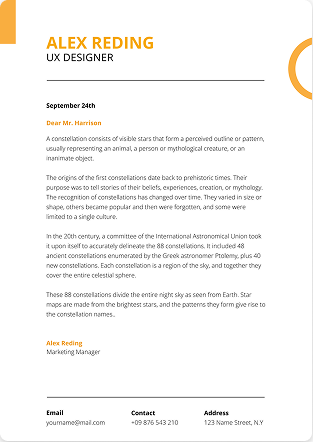
A cover letter is a short, one-page document you send with your resume that introduces you, explains why you're applying, and makes the case for why you're the right fit for a specific role. Where your resume lists what you've done, the cover letter tells the story connecting your experience to the employer's needs in your own voice.
Why Do You Need a Cover Letter?
Because your resume can't do everything. A cover letter lets you:
- Explain your motivation for this specific company and role.
- Connect the dots a resume can't — a career change, a gap, a relocation.
- Show personality and communication skills that bullet points flatten.
- Prove effort — a tailored letter signals you care enough to customize.
Even where it's "optional," a sharp cover letter often tips a close decision in your favor.
What Do Recruiters Look For in a Cover Letter?
Recruiters skim before they read, so they're scanning for signals of fit:
Relevance — is this clearly written for their role, or a generic template?Evidence — specific, quantified achievements, not vague adjectives.
Enthusiasm — genuine interest in the company, backed by a detail or two of research.
Clarity and brevity — a focused half-to-one page, easy to read.
Professional tone — confident, warm, and free of typos.
The fastest way to lose them is a letter that just restates your resume in paragraph form.
How to Write a Cover Letter (Structure)
A cover letter follows a simple five-part structure:
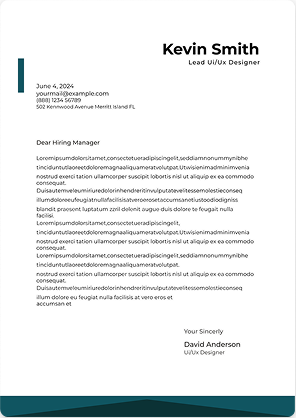
- Header — your name and contact details (email, phone, city, LinkedIn/portfolio).
- Greeting — address the hiring manager by name where possible; use their title ("Dear Hiring Manager") if you can't find it. Avoid "To Whom It May Concern."
- Opening — state the role you're applying for and hook them with a quick value proposition.
- Body (1–2 paragraphs) — prove you're a strong fit with specific, quantified achievements tied to the job. Start bullets or sentences with strong action verbs, and mirror keywords from the posting — the same tailoring logic you'd use on your resume.
- Closing — reinforce your value, show enthusiasm, and ask for the interview (covered in depth below).
For a role-specific walkthrough, see how to write a cover letter for tech jobs.
Best Cover Letter Formatting
Keep it clean, professional, and easy to scan:
Length: half a page to one page, 250–400 words.Font: a clean, professional typeface (Arial, Calibri, Times New Roman) at 10.5–12pt.
Margins & spacing: 1" margins, single-spaced paragraphs with a blank line between them.
Alignment: left-aligned; no justified text or center formatting.
File: submit as a PDF unless the employer asks for .docx.
Match your resume — same header, font, and name styling so the two look like one application.
How to End a Cover Letter (5 Steps)
The closing is your final impression. Follow these five steps:
Restate your value in one line. Connect your most relevant strength to what the company needs. Keep it specific lead with a result. "Reducing onboarding time by 40% in my current role taught me the process discipline your operations team is scaling toward."Show genuine enthusiasm. Signal real interest in this company, ideally referencing something specific you admire. Enthusiasm is contagious and sets you apart.
Add a clear call to action. Invite the next step and mention the interview directly without a prompt, the reader has no reason to act. "I'd welcome the chance to discuss how I can help your team hit its Q3 goals."
Thank the reader. A brief, sincere thank-you for their time sets a respectful tone.
Sign off professionally. Close with a standard sign-off and your full name.
The tone test: lean toward hope, not expectation. You can't read the hiring manager's mind or know you're better than every other candidate, so confident-but-humble beats "I'm perfect for this role."
5 Powerful Ways to Close a Cover Letter (With Examples)
There's no single perfect ending your close should reflect your strengths. Five approaches that consistently work:
1. Speak to the hiring manager's hidden need. Show you understand the problem they're actually trying to solve.
"A detail-first approach paired with strong stakeholder skills is exactly what a smooth systems migration demands and it's the work I find most energizing."
2. Link your personal "why" to their mission. Connect what drives you to what the company stands for (only if it's genuine).
"I've followed your work in accessible design for years; contributing to a product that removes barriers for real users is the kind of impact I want my work to have."
3. Reinforce your key point through repetition. Restate your strongest selling point in fresh words so it sticks.
"Turning underperforming territories around is the through line of my career — and it's precisely the challenge this role describes."
4. Open a story you'll finish at the interview. Leave an intriguing thread.
"In an interview, I'd love to walk you through how a single workflow change lifted our team's output by a third."
5. Reference a genuine connection. A shared contact or real affinity with the company cements fit.
"A former colleague on your engineering team spoke highly of your mentorship culture — it's a big part of why I'm applying."
Best Cover Letter Sign-Offs
Keep the final line simple and professional. Safe, effective options:
- Sincerely,
- Best regards,
- Kind regards,
- Respectfully,
- Warm regards,
- Thank you,
Follow it with your full name. Avoid overly casual sign-offs ("Cheers," "Take care") for formal applications, and skip dated ones where they don't fit the company's tone.
How NOT to End a Cover Letter
The closing is where good letters often stumble. Avoid these:
- Neediness: "I want this job more than anything please give me a chance." Desperation undercuts confidence.
- Arrogance: "I'm the perfect fit and expect to be your top performer within months." Presumption puts readers off.
- Empty adjectives: "I'm a driven, dynamic, results-oriented professional." Unproven traits waste your last impression.
- A limp fade-out: ending on pleasantries with no call to action leaves nothing to respond to.
- Being too gimmicky: stand out on substance, not shock value.
When in doubt, read your closing aloud if it sounds off, rewrite it.
Cover Letter Closing Examples
Standard, confident close:
"Thank you for considering my application. I'm excited about the chance to bring my process-improvement track record to your operations team, and I'd welcome the opportunity to discuss how I can help you hit your growth goals.
Sincerely, [Your Name]"
Short and punchy:
"Thank you for your time. I'd love to discuss how I can help your team achieve its sales targets this year.
Best regards, [Your Name]"
Frequently Asked Questions
Q1. How do you end a cover letter?
Summarize your value, show enthusiasm for the role, add a clear call to action asking for the interview, thank the reader, and sign off professionally with your full name.
Q2. What is the best closing line for a cover letter?
One that restates your value and invites the next step e.g., "I'd welcome the chance to discuss how I can help your team achieve [specific goal]." Keep it specific to the role.
Q3. Should you ask for an interview in a cover letter?
Yes. Without a direct invitation, the hiring manager has no prompt to act. A hopeful, confident line like "I'd welcome the opportunity to discuss this further" works well.
Q4. What is the best sign-off for a cover letter?
"Sincerely" is the safe classic; "Best regards" and "Kind regards" are strong professional alternatives. Follow with your full name.
Q5. How long should a cover letter closing be?
Two to four sentences enough to restate your value, show interest, and ask for the interview, without repeating your whole letter.
Q6. Can you end a cover letter with "thank you"?
Yes a brief, sincere thank-you is polite and effective, either within the closing paragraph or as the sign-off itself.
The Bottom Line
Knowing how to end a cover letter is what turns a good letter into an interview. Restate your value, show real enthusiasm, ask for the next step, and close cleanly leaning toward hope over entitlement. Every word in that final paragraph earns its place.
Want a head start? Generate a tailored cover letter with AI, pair it with a resume that stands out, and make sure your LinkedIn profile tells the same story.