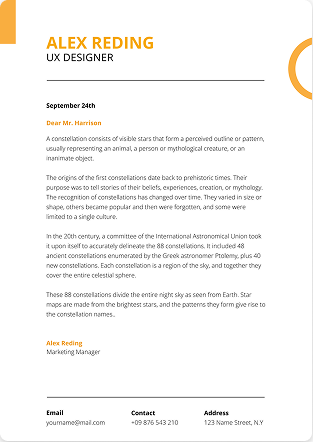

Cover letter vs resume what's the difference? Your resume is a structured, factual snapshot of your skills, experience, and achievements in scannable bullet points. Your cover letter is a short narrative that explains why you want the role and connects your background to the employer's needs. The resume proves you can do the job; the cover letter tells the story behind it. Most applications need both. Here's how they differ and how to use each.
Key Takeaways
- A resume shows your results; a cover letter shows your motivation and personality.
- A resume is always required; a cover letter is included when requested or when it can strengthen your case.
- They should match in design but never duplicate each other in content.
- Both must be tailored to the specific job with relevant keywords and achievements.
Cover Letter vs Resume: Quick Comparison
| Resume | Cover Letter | |
|---|---|---|
| Purpose | Proves you can do the job | Explains why you want it and fit |
| Format | Sections + bullet points | 3–4 flowing paragraphs |
| Length | 1–2 pages | Up to 1 page |
| Voice | No pronouns; objective | First-person; conversational |
| Content | Skills, experience, metrics, education | Story, motivation, company fit |
| Required? | Almost always | When requested or strategic |
What Is a Resume?
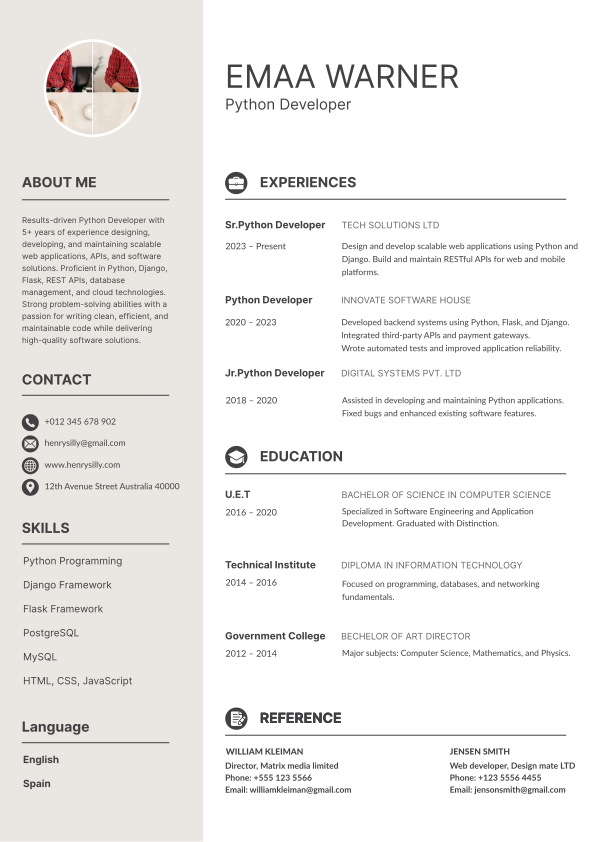
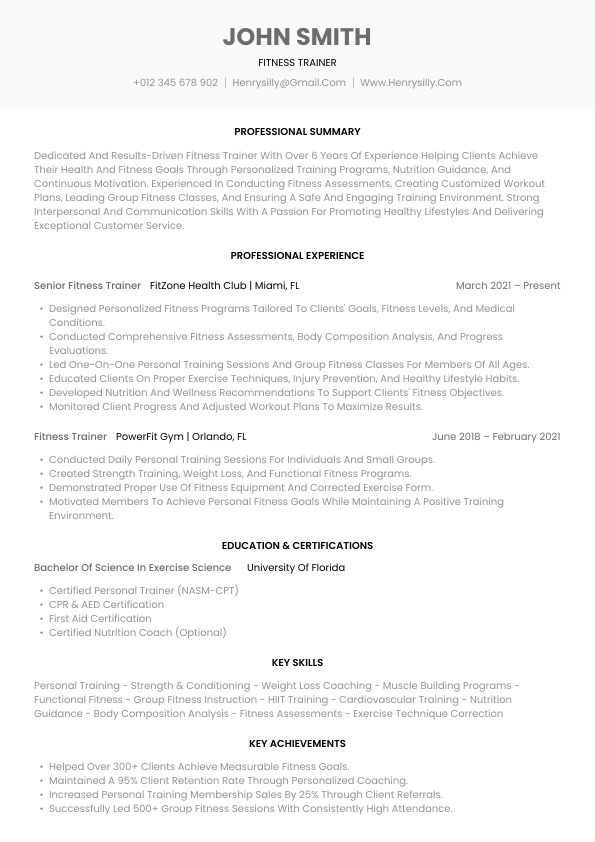
A resume is a one-to-two-page professional document that summarizes your qualifications in a structured, scannable format. It lets a hiring manager decide in seconds whether you meet the requirements through clearly labeled sections and concise, achievement-focused bullets rather than paragraphs.
A resume typically includes:
Header — name, phone, professional email, city, and LinkedIn/portfolio.Summary — a two-to-three-line snapshot of your value, with your target title.
Work experience — reverse-chronological roles with quantified, action-verb bullets.
Skills — a targeted mix of hard and soft skills .
Education — degrees, certifications, relevant coursework.
Optional — projects, volunteer work, awards, memberships.
Learn what separates a great one in what makes a resume stand out.
What Is a Cover Letter?
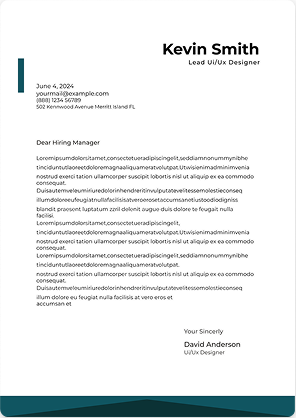
A cover letter is a one-page business letter that introduces you, states your interest in a specific role, and shows how your qualifications match the company's needs. Where a resume lists, a cover letter narrates in full paragraphs, in your own voice and gives you room to add context a resume can't, like a career change or an employment gap.
A cover letter typically includes:
Header — your contact details, formatted to match your resume.Date and employer details — hiring manager's name, title, company.
Salutation — address the hiring manager by name where possible.
Opening — the role you're applying for and why you're excited about it.
Body (1–2 paragraphs) — specific examples connecting your experience to their needs.
Closing — a confident wrap-up with a call to action (see how to end a cover letter ).
Sign-off — "Sincerely" or "Best regards," and your full name.
For a role-specific example, see how to write a cover letter for tech jobs.
Cover Letter vs Resume: Key Differences
Purpose
A resume presents your qualifications so employers can quickly gauge fit. A cover letter explains your motivation and shows how your background adds value to this specific role and company.
Structure
A resume uses defined sections and short bullet points built for scanning. A cover letter uses organized paragraphs and narrative language to build a case.
Voice
A resume avoids personal pronouns, stating accomplishments as objective facts. A cover letter is written in the first person and uses a warmer, conversational tone to show personality.
Format & Appearance
A resume relies on clean sections, consistent fonts, and bullets. A cover letter follows business-letter format — header, salutation, paragraphs, sign-off. Both should look cohesive and tailored.
Content
A resume covers contact info, summary, experience, skills, and education. A cover letter covers your interest, motivation, and a few standout examples that prove fit without repeating the resume line for line.
How Cover Letters and Resumes Work Together
They're complementary, not redundant. The resume gives the facts; the cover letter gives the context and motivation behind them.
For example, a resume bullet might read: "Launched a product campaign that beat sales projections by 35% in the first quarter." The cover letter then explains how the market research, the cross-team collaboration, the integrated strategy surfacing soft skills like leadership and communication that a bullet can't fully convey.
Together they:
Tell your complete story — facts plus context and motivation.Show relevance — the cover letter maps your achievements onto their exact needs.
Reinforce alignment — both use keywords from the job description and stay tailored to the role .
When to Use a Cover Letter
Include a cover letter when it's requested and often when it isn't, if it strengthens your case:
- The job posting asks for one — always include it.
- Career changes — explain transferable skills and your pivot.
- Gaps or special circumstances — add context a resume can't.
- Referrals or networking — introduce yourself proactively.
- To demonstrate company fit — show you've done your research.
Skip it when the employer says not to, when the application only allows one upload, or for bulk applications where it would be generic.
When to Use a Resume
Almost always. Include a resume for every job application, internship, promotion, referral, or graduate program — unless the listing explicitly states otherwise. It's the one document nearly every employer expects.
Tips for a Strong Cover Letter and Resume
- Follow the application instructions — send exactly what's requested, in the right format.
- Research the employer — tailor both documents to their needs and culture.
- Match the design — same header, font, and styling so they look like one application.
- Don't duplicate — the cover letter expands on the resume; it doesn't repeat it.
- Keep each to one page (two for the resume only if you're senior).
- Tailor every time — swap in keywords and achievements for each specific role.
Frequently Asked Questions
Q1. What is the difference between a cover letter and a resume?
A resume is a structured, factual list of your skills, experience, and achievements. A cover letter is a narrative that explains your interest in the role and connects your background to the employer's needs. The resume proves it; the cover letter tells the story.
Q2. Do you need both a cover letter and a resume?
A resume is almost always required. A cover letter should be included whenever it's requested or when it can strengthen your application for a career change, a referral, or to show company fit.
Q3. Should your cover letter match your resume?
Yes in tone, formatting, header, and key qualifications, so the application looks cohesive. But the content should complement, not duplicate, the resume.
Q4. Is a cover letter better than a resume?
Neither is "better" they serve different purposes. The resume gives a quick snapshot of your qualifications; the cover letter adds context, motivation, and personality. Together they present a complete picture.
Q5. Can you have a cover letter without a resume?
No. A cover letter introduces your interest but doesn't provide the full record of experience and qualifications employers expect. Always pair it with a resume.
Q6. Can I use the same cover letter for every job?
No. Tailor the content to each role and employer, even if you reuse the same template. A generic cover letter undercuts its main advantage showing genuine, specific interest.
The Bottom Line
Cover letter vs resume isn't an either/or — it's a partnership. Your resume proves you can do the job; your cover letter explains why you want it and why you're the right fit. Keep them aligned in design, distinct in content, and tailored to every role.
Ready to build both? Create your resume with AI, generate a matching cover letter, and check it against the job with the ATS Resume Checker before you apply.